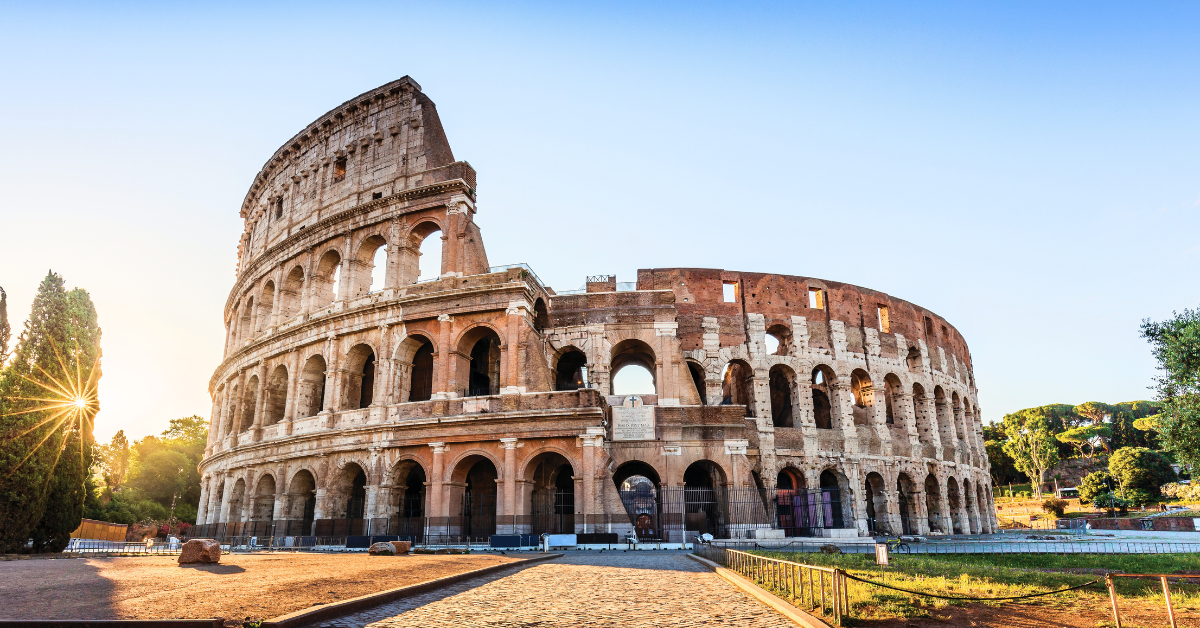
Rome in 24 Hours: How to See Absolutely Everything | A comprehensive guide
Destinations • Europe • Italy
February 17, 2026
The taxi pulled up to our hotel at the top of the Spanish Steps.
“Taking a taxi instead of the bus,” Jon said, watching the meter.
I looked down at 135 steps packed with tourists. Then at our two 50-pound suitcases.
“Good thing we splurged on the taxi.”
That decision? Best call we made. Because hauling those bags up from the bottom in 85-degree heat would’ve killed us before we even started sightseeing.
And that expensive hotel location at the top of the Spanish Steps? It made our entire one-day Rome strategy work.
Everyone Says You Can’t See Rome in a Day. Challenge Accepted.
All the Rome guides say the same thing: “You need at least 3-4 days to see Rome properly. If you only have one day, skip the Vatican—you don’t have time.”
We had exactly one day before our Mediterranean cruise departed from Civitavecchia.
And we saw everything:
- The Colosseum (inside, not just walk-by)
- Roman Forum
- Capitoline Hill
- Vatican Museums
- Sistine Chapel
- St. Peter’s Square
- Trevi Fountain
- Spanish Steps
- The Pantheon
- Piazza Venezia
- Plus the best gelato in Rome (found by accident)
No rushed panic. No feeling like we missed everything. We had time to sit down for lunch, enjoy a bottle of wine at dinner, and wander through neighborhoods just because they looked interesting.
The secret? Three strategies nobody talks about:
- Friday evening Vatican strategy (extended hours, almost empty)
- Pre-booking tickets (saved us 150+ minutes in lines)
- Strategic hotel location (time is money when you have one day)
Let me show you exactly how we did it.
🗺️ Your Interactive Rome Map
We’ve mapped our exact 24-hour route including all 13 attractions, the Friday evening Vatican strategy, metro stops, and that incredible gelato shop we found at 10pm. Save this map to your Google Maps for easy navigation during your trip.
What’s on the map:
- All 13 attractions with our actual timing and costs
- Walking routes between each stop
- Metro connections (Lines A & B with exact stops)
- Our actual hotel at the top of Spanish Steps
- Gelateria del Teatro (Via dei Coronari, 65/66)
- Honest reviews:what worked and what to skip
How to use it: Click any pin for details, costs, and insider tips. Save the map to access it offline in Rome. Share with travel companions so everyone has the same route.
The Friday evening Vatican strategy is marked with a star ⭐ – this timing trick saved our trip!
Getting to Rome affordably = more budget for gelato and wine.
Our FREE Flight Cost Saving Guide shares the booking windows that saved us 43% on European flights. Get it now 👇
Table of Contents
- 🗺️ Interactive Map (see our exact route with all stops)
- Before You Go
- Your 24-Hour Itinerary
- Planning Your Trip
- Need-to-Know
Before You Go
The Friday Evening Vatican Secret Nobody Tells You
Every Rome guide will tell you: “The Vatican is massive. Plan 3-4 hours minimum. Arrive when it opens at 9am to beat the crowds. If you only have one day in Rome, skip it (you don’t have time).”
What they DON’T tell you:
From April through October, the Vatican Museums stay open until 10:30pm every Friday evening.
Same museums. Same ticket. But at 5:30pm on a Friday? We walked through the Sistine Chapel with maybe 20 other people total.
During the day, the chapel is packed with hundreds of people. Guards constantly shushing. Tour groups blocking views. Miserable.
Friday evening? Quiet. Space to actually look at the ceiling. Cooler temperatures inside and out.
This one strategy let us see both the Colosseum AND the Vatican in one day. Comfortably.
Important details:
- Friday evening hours: Last entry at 9pm (April through October only)
- Book tickets in advance (they do sell out)
- You’ll have 1.5 to 2 hours before closing
- That’s plenty of time for Vatican Museums plus Sistine Chapel
- St. Peter’s Square is right there afterward (always open, no ticket needed)
- Dinner options nearby are plentiful
Quick Facts
One critical note:
Skip the group tours. They take 3+ hours and you simply cannot spend half your day in one building when you’re trying to see an entire city. Pre-book your ticket and go at your own pace. You’ll spend 90 minutes max and actually enjoy it.
Alternative: Early Morning Strategy (If You Can’t Do Friday)
If your trip doesn’t land on a Friday, flip the strategy: start your day at the Vatican and do ancient Rome in the afternoon.
The Early Bird Gets the Empty Sistine Chapel:
- 6:45am: Start at St. Peter’s Square (always accessible, beautiful at sunrise, zero crowds)
- 7:00am: St. Peter’s Basilica opens. Walk right in. No line. No waiting. The basilica at 7am feels like a different place than the chaos it becomes by 10am. Spend 30 minutes inside.
- 7:30am: Dome climb opens. If you’re doing this, do it now. 551 steps, incredible views, and you’ll be done before the tour groups arrive. Allow 45 minutes for the climb and photos at the top. (Skip this if you’re not into stairs or tight spaces. The square itself is stunning enough.)
- 8:30am: Vatican Museums open. Walk over (5 minutes from the dome exit). With pre-booked tickets, you’ll be inside within 10 minutes. Museums are nearly empty until 10am. Hit the highlights: Pinecone Courtyard, Gallery of Maps, Sistine Chapel. You’ll be done by 10:30am, maybe 11am if you linger.
- 11:00am: Grab a quick lunch or snack near the Vatican, then metro to the Colosseum for the afternoon.
- Rest of the day: Follow the itinerary below for ancient Rome, wandering the historic center, Trevi Fountain, and gelato hunting.
This strategy works. You see everything. You just reverse the order and start obscenely early (but honestly, the lack of crowds makes it worth setting an alarm).
Pre-Book These Two Things (Worth Every Euro)
The line for Colosseum tickets wrapped around the building. Ninety minutes long, easy.
We walked straight to the entrance.
The woman in line shot us a look that could melt marble. “Excuse me, the line starts back there.”
I pulled out our printed pre-booked tickets. “We already have tickets.”
Her face fell. She’d been standing there over an hour.
Look, it’s 2026. Pre-booking saves you time and prevents sold-out disappointments. Why would you stand in line when you don’t have to?
| Attraction | Time Saved | Why It Matters |
|---|---|---|
| Colosseum + Roman Forum | 90 minutes | Walk past massive line; combo ticket includes Forum and Capitoline Hill |
| Vatican Museums | 60 minutes | Tickets sell out (especially Friday evenings); skip ticket office entirely |
Pre-booking lets you walk straight in while everyone else stands in line.
Where to book:
- Colosseum: Official Parco Archeologico Del Colosseo website (book 1-2 weeks ahead)
- Vatican: Official Vatican Museums site (book as soon as dates are firm, especially for Friday evening)
Quick Facts
Pro Tip:
The Colosseum “combo ticket” includes the Roman Forum AND Capitoline Hill (a viewpoint with incredible city views). Don’t buy separate tickets. One ticket gets you into all three.
Quick Facts
Map Tip:
Save our interactive map (linked above) to see exactly where the Colosseum and Vatican are located, plus walking times between all attractions.
Where to Stay: Location Matters When You Have One Day
Our hotel was at the top of the Spanish Steps.
Worth it.
We walked out our door and we were AT the Spanish Steps. Trevi Fountain was a 10-minute walk. The metro to the Colosseum and Vatican was 2 minutes from our hotel. We dropped our bags, left again within 15 minutes, and spent the next 12 hours seeing Rome instead of commuting.
For just 24 hours in Rome, location bought us time. (See exact location and walking distances on the map above.) For complete lodging analysis and budget alternatives, check our Rome 24-Hour Budget Breakdown post (coming soon).
When you’re working with one day in Rome, location isn’t a luxury. It’s how you buy back time.
Best areas for quick Rome trips:
- Spanish Steps / Trevi area (Centro Storico): Walkable to everything. Metro access for Colosseum and Vatican. Eliminates commute time. Worth it for single-day visits.
- Near Termini Station: Cheaper option. Excellent metro access. Less charming neighborhood. Better for 3-4 day trips when you have time to commute.
- Trastevere: Beautiful, authentic neighborhood. Farther from major attractions. Better for longer stays or second Rome visits.
- Near Vatican: Convenient if doing early morning Vatican strategy. Far from Colosseum and historic center. Only stay here if Vatican is your priority.
What to Skip Without Regret
You have one day. You cannot see everything. That’s fine.
Skip these without guilt:
- Borghese Gallery: Beautiful, yes. Requires advance reservations and 2-3 hours. Save it for your next Rome trip when you have more time.
- Castel Sant’Angelo: Interesting but not essential. You’ll walk past it on your way to or from the Vatican. Take a photo from the bridge. That’s enough.
- Appian Way and Catacombs: Way outside the city center. Requires half a day. Not worth it when you’re trying to see the Colosseum, Vatican, and historic center.
- Day trips: Some ambitious people try to add Pompeii, Florence, or Tivoli. Don’t. You’ll spend your entire day on trains and see nothing properly.
Too many museums: Pick one or two max. We did the Vatican Museums. That’s it. Saw the Pantheon (free) but didn’t do any other paid museums.
The “everyone says you must” list that’s actually optional:
- St. Peter’s Basilica interior: The square is magnificent and free. The basilica interior requires a line (30-60 minutes during the day) and security check. If you’re doing the early morning strategy, hit it at 7am opening. Otherwise, the square is honestly enough.
- Climbing St. Peter’s dome: Incredible views, but 551 steps and another line. If you’re into cardio and views, do it at 7:30am opening. If not, skip it without regret.
Villa Borghese gardens: Pretty, but you can see beautiful gardens anywhere. Not worth your limited Rome time.
What’s actually worth your time:
Pre-booked Colosseum and Roman Forum (2-3 hours total). Vatican Museums Friday evening or early morning (1.5-2 hours). Trevi Fountain after dark (15 minutes, magical). The Pantheon (15-20 minutes, completely free, mind-blowing). Wandering the historic center (this is where we found the best gelato and stumbled on tiny piazzas that don’t make it into guidebooks).
Your 24-Hour Itinerary
Morning: Ancient Rome (Colosseum, Forum, and Hills)
Start time: 9:40am (landed at Ciampino Airport)
Hotel check-in: 10:30am (Suite Sistina)
Left hotel: 11:00am
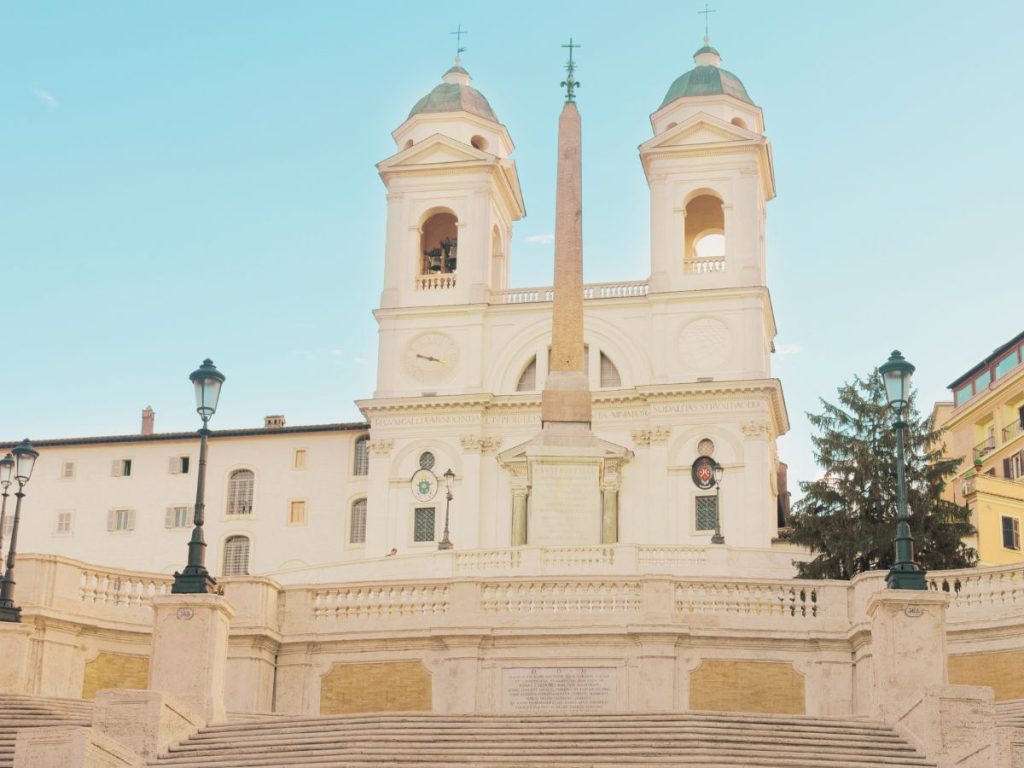
Stop 1: Spanish Steps (Right Outside Our Hotel)
Time spent: 15 minutes
The Spanish Steps are steps. Beautiful steps, yes, but they’re outside. Always free. Always accessible.
We were staying at the top, so we’d see them multiple times during our 24 hours. No need to linger.
What to see: The steps themselves (obviously). Piazza di Spagna at the bottom with the Barcaccia fountain. Designer shopping on Via Condotti if that’s your thing.
Quick Facts
Pro Tip:
For a different perspective, also go to the top of the steps looking down.
Stop 2: Walk to the Pantheon (30 minutes walking)
Time spent: 20 minutes at Pantheon
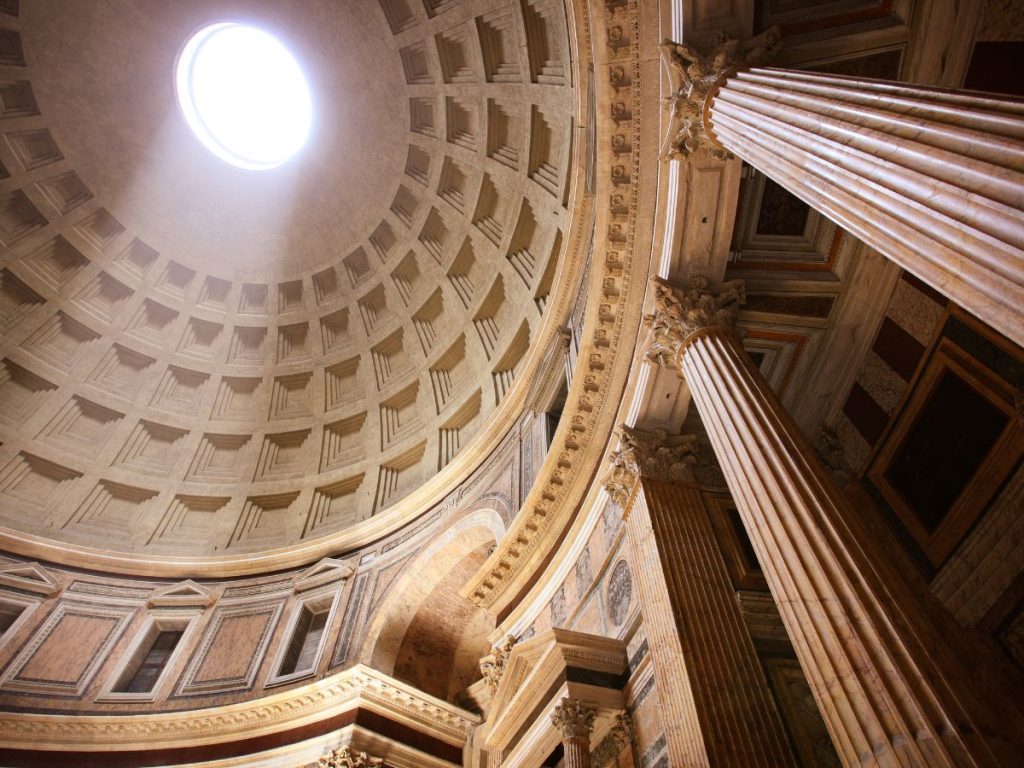
We walked from Spanish Steps to the Pantheon (about 30 minutes) through Rome’s historic center. Narrow cobblestone streets, small piazzas, gelato shops with hand-written signs, outdoor cafes where old Italian men read newspapers and smoke. The “wandering through Rome” experience everyone talks about.
The Pantheon is completely free. No tickets, no reservations, just walk in.
And it’s staggering.
The dome is massive, but that’s not what gets you. It’s realizing it was built 2,000 years ago. No steel reinforcement. No modern engineering. Just Roman concrete and geometry that works.
Stand in the center and look up at the oculus (the open hole in the ceiling where rain comes in, yes, intentionally). The way the light moves across the interior throughout the day, shadows shifting, the sense of space—photos cannot capture it.
We spent 20 minutes inside. That’s plenty. More than that and you’re just standing there thinking “yep, still impressive.”
Quick Facts
Insider tip:
Go early (before 11am) or late (after 4pm) to avoid the worst crowds. We went mid-morning and it was packed but manageable.
Go early (before 11am) or late (after 4pm) to avoid the worst crowds. We went mid-morning and it was packed but manageable.
Lunch: Historic Center (and a Rick Steves Miss)
Time: 12:30pm
Location: Hosteria Costanza
I’d done my research. Rick Steves recommended Hosteria Costanza. Rick Steves knows European travel. We booked it.
The food was… the kind of forgettable where you finish eating, pay the bill, and then an hour later can’t remember a single thing you ordered.
The pasta was fine. The appetizer sampler had nothing wrong with it and nothing right with it either. The tiramisu tasted like someone described tiramisu to someone who’d never had tiramisu. We expected to remember this meal fondly. We don’t.
Lesson learned: This was the second time we’d followed a Rick Steves food recommendation and been underwhelmed. His travel logistics advice is excellent. His restaurant picks, not so much. (Sorry, Rick. Still love your audio guides.)
What I’d do differently: Ask your hotel concierge for a lunch recommendation. They know which places are actually good versus which places are in guidebooks because they were good in 1997.
Or skip the sit-down lunch entirely. Grab pizza al taglio (by the slice) from Bonci or Pizzarium. Eat standing up or sitting on a piazza wall.
For complete food cost breakdown including all meals and alternatives, check our Rome 24-Hour Budget Breakdown post.
Better options:
- Supplì (fried rice balls), cheap and surprisingly filling
- Save the sit-down restaurant for dinner when you have time to enjoy wine and people-watching
Afternoon: Ancient Rome + Walk-by Attractions
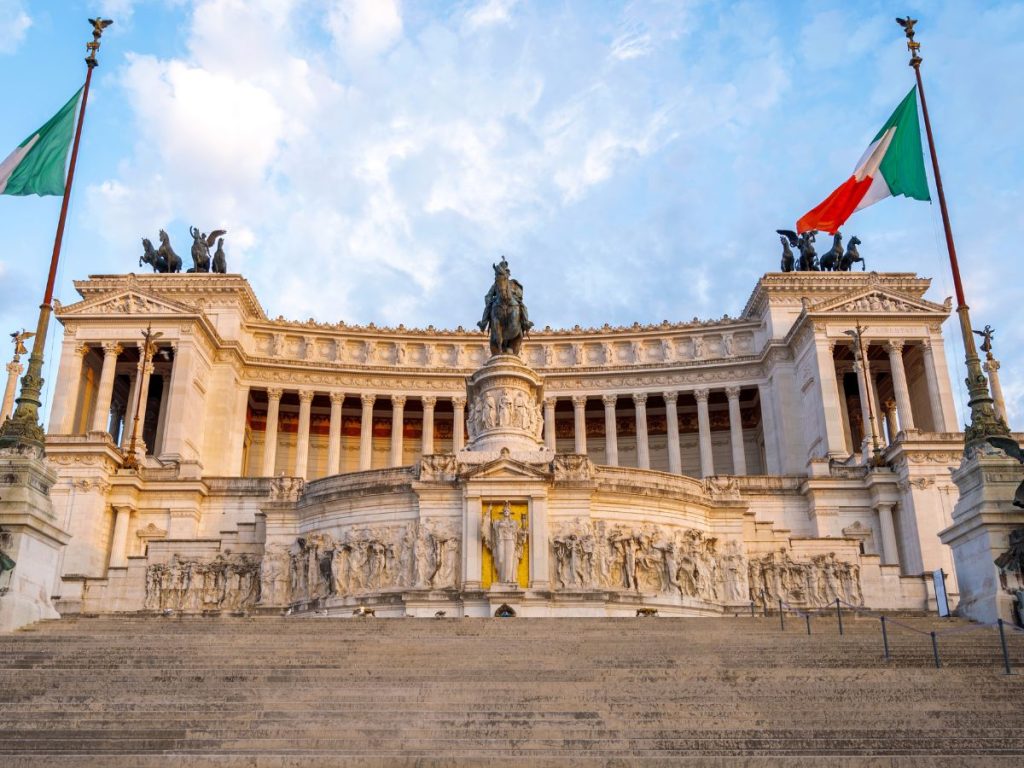
Stop 3: Piazza Venezia (Walk-by)
Time spent: 5 minutes
Between lunch and the Colosseum, we walked past Piazza Venezia.
The massive white monument (Vittorio Emanuele II) is impossible to miss. Locals call it “the wedding cake” or “the typewriter.” Look at it and you’ll understand why.
We took photos from the street and kept walking. That’s all you need.
Stop 4: Colosseum + Roman Forum + Capitoline Hill
Time: 2:30pm to 5:00pm (2.5 hours total)
Line wait time: 0 minutes (pre-booked = skip the line)
This is why you pre-book.
The ticket line wrapped around the building. Easily 90 minutes. We walked past everyone, showed our phone tickets, and went straight in.
How to do this efficiently:
Colosseum first (spend 1h+ inside):
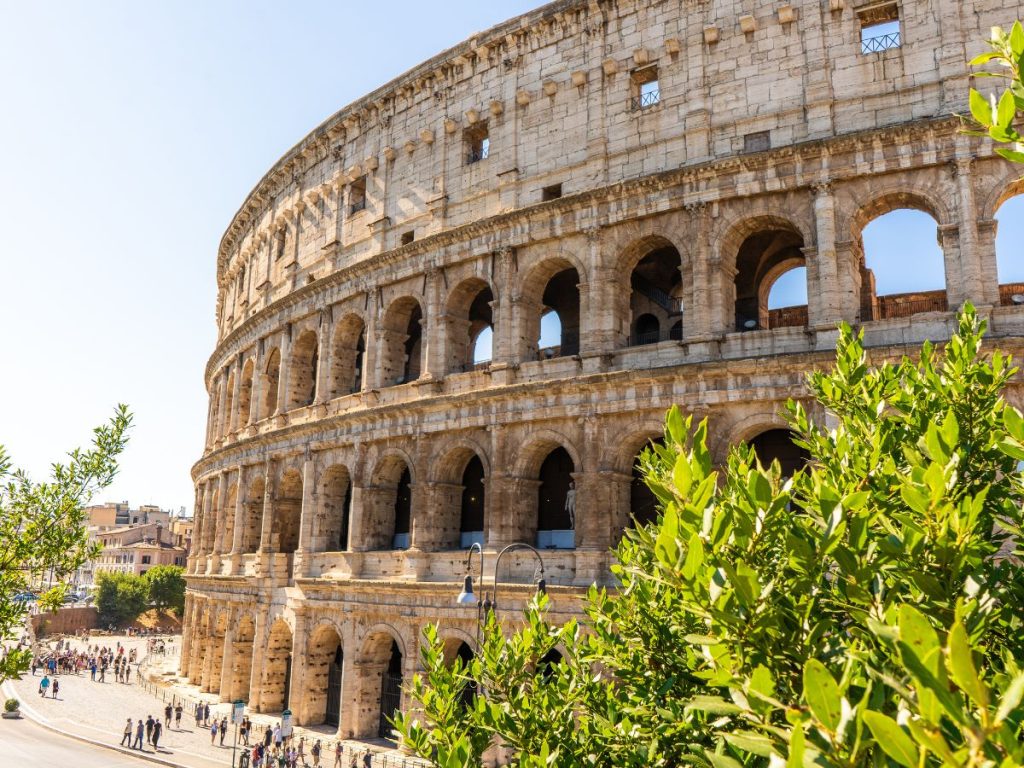
Walking into the Colosseum is like walking onto a movie set, except it’s real and 2,000 years old.
Your standard ticket gets you into the first and second levels. Skip the separate arena floor tour—you don’t need it.
Stand at the edge of the first level and look down. We pulled out Rick Steves’ free audio guide (okay, his audio guides ARE useful, unlike his restaurant picks) and listened while imagining 50,000 Romans screaming, betting, watching gladiators fight and lions released from underground chambers. The acoustics were designed so even the top rows could hear everything.
Then go up to the second level. Definitely worth it for the different perspective and views.
Look at the structure itself: 2,000 years old, survived earthquakes and wars, still standing. That’s Roman engineering.
Don’t try to see every corridor. You’ll burn out. Hit the highlights and move on.
Walk to Roman Forum (5 minutes from Colosseum exit):
Same ticket covers this. No additional entry fee.
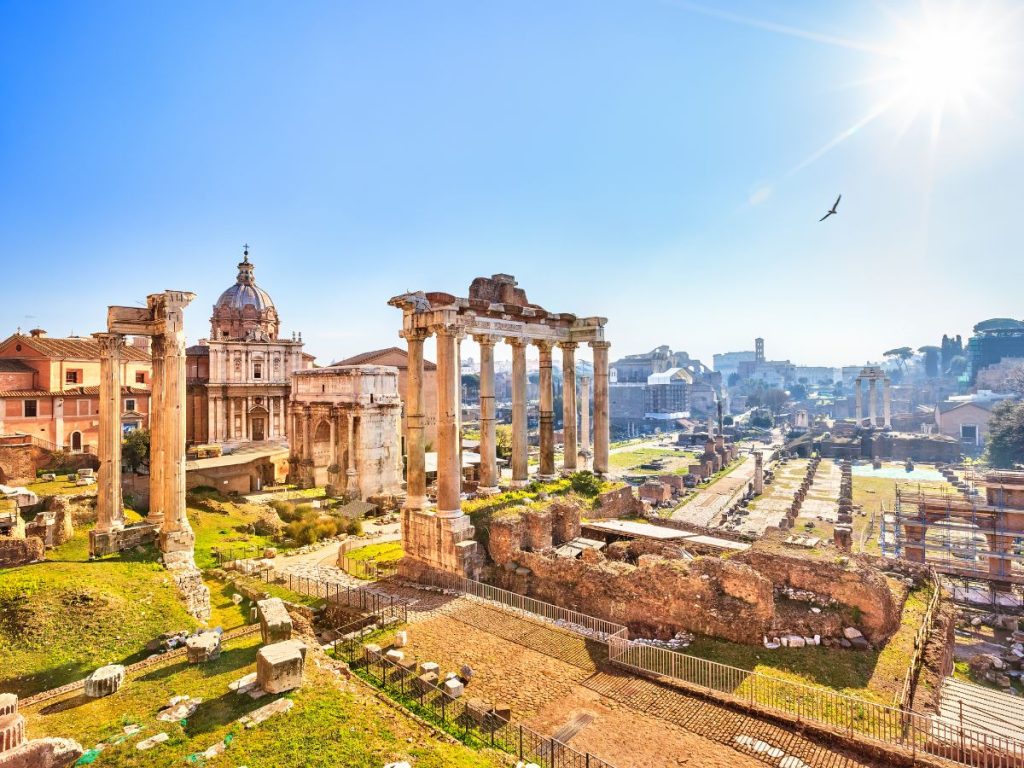
The Roman Forum is a field of ancient ruins. Temples, government buildings, arches. All of it was the center of Roman political life 2,000 years ago.
It’s fascinating, but honestly? We burned out. After the Colosseum, we spent maybe 30 minutes wandering through. The Arch of Titus at the entrance. Temple of Caesar. House of the Vestal Virgins. Via Sacra.
Unless you’re really into Roman history, the Colosseum is what you came to see. The Forum is included with your ticket, so walk through, see the highlights, and don’t feel guilty about not spending an hour there.
Rick Steves has an audio guide for the Forum if you want deeper context on what you’re looking at. We didn’t use it, but download it if that’s your thing.
End at Capitoline Hill (viewpoint):
Also covered by your combo ticket. Walk up the hill to Piazza del Campidoglio (designed by Michelangelo).
This is worth it. Incredible views of the Roman Forum from above. You can see the entire layout and how everything connected. Great spot for photos.Spend 15-20 minutes, then head out.
Quick Facts
Pro Tip:
- Bring water (it’s hot, water fountains exist but aren’t everywhere)
- Wear comfortable shoes (uneven ground, stone paths, your feet will hate cute sandals)
- Sun protection (almost zero shade in the Forum)
- Afternoon is slightly cooler than midday (but still hot in summer)
- Bring water (it’s hot, water fountains exist but aren’t everywhere)
- Wear comfortable shoes (uneven ground, stone paths, your feet will hate cute sandals)
- Sun protection (almost zero shade in the Forum)
- Afternoon is slightly cooler than midday (but still hot in summer)
Total time breakdown: Colosseum (1h+) + Forum (30 min) + Capitoline Hill (15-20 min) + walking between (10-15 min) = 2 to 2.5 hours
What we loved: The sense of standing where gladiators fought, where Julius Caesar walked, where actual history happened. Photos don’t capture that feeling.
What surprised us: How much is still standing after 2,000 years. And how much is NOT standing. You have to use your imagination a lot.
Evening: The Vatican Museums Strategy
Time: 5:00pm to 10:00pm
After the Forum, we took the metro to the Vatican. Line A to Ottaviano station. Ten-minute ride.
This is where the Friday evening strategy pays off.
5:30pm: Entered Vatican Museums
What it’s like Friday evening:
I know the difference because we went back a decade later with our 6-year-old twins. During the day, on a tour, and not on a Friday. We weren’t sure if the kids would want to go, and by the time we decided we should, regular entry tickets were sold out. A month before our trip. We had to book a tour group.
It was packed and hot. Not only summer hot, but hundreds of bodies crammed into galleries + summer hot. The twins were bored within an hour. We ditched the tour and pushed our way to the Sistine Chapel. Crammed in like sardines. Guards shushing everyone. Tour groups everywhere. Try explaining the magnitude of Michelangelo’s masterpiece to six-year-olds when someone’s backpack is constantly blocking their view. Miserable.
Friday evening at 5:30pm? Twenty people total in the Sistine Chapel. The galleries were quiet enough to hear our own footsteps. We had space to actually look at the art instead of the backs of people’s heads. And temperature-wise? It was cooler outside, cooler inside the museums, and we could actually stand there while maintaining our personal space.
Michelangelo painted that ceiling lying on his back on scaffolding for four years. FOUR YEARS. Looking up the entire time. I got a crick in my neck after five minutes just looking at it. The man must have had permanent neck damage. This was worth building our entire itinerary around.
How to do Vatican Museums efficiently:
The Vatican Museums are enormous. Nine miles of galleries. You cannot see everything. Don’t try.
The “Greatest Hits” route (1.5-2 hours):
- 📸 Pinecone Courtyard (photo stop, pretty, 5 minutes)
- 🗺️ Gallery of Maps (stunning and unique to Vatican, 15-20 minutes, these massive painted maps of Italy from the 1500s covering the entire ceiling and walls)
- 🎨 Raphael Rooms if you have time (we didn’t, and we don’t regret it)
- ✨ Sistine Chapel (this is the finale, everyone ends here, 20-30 minutes)
Rick Steves’ audio guide works here too if you want context on specific galleries, though honestly, the art speaks for itself.
Skip most of the random galleries of ancient sculptures and medieval paintings unless you’re really into art history. They all blend together after a while.
Quick Facts
Pro Tip:
- Wear layers (it’s cold inside, even in summer, we’re talking 60-65°F)
- Dress code required: knees and shoulders must be covered (they WILL turn you away)
- Bathrooms are limited so go before you enter the Sistine Chapel section
- No photos allowed in Sistine Chapel (they’re serious about this, guards will yell at you)
- When you’re done, the exit takes you right to St. Peter’s Square
- Wear layers (it’s cold inside, even in summer, we’re talking 60-65°F)
- Dress code required: knees and shoulders must be covered (they WILL turn you away)
- Bathrooms are limited so go before you enter the Sistine Chapel section
- No photos allowed in Sistine Chapel (they’re serious about this, guards will yell at you)
- When you’re done, the exit takes you right to St. Peter’s Square
St. Peter’s Square
Time: 7:30pm
Cost: Free
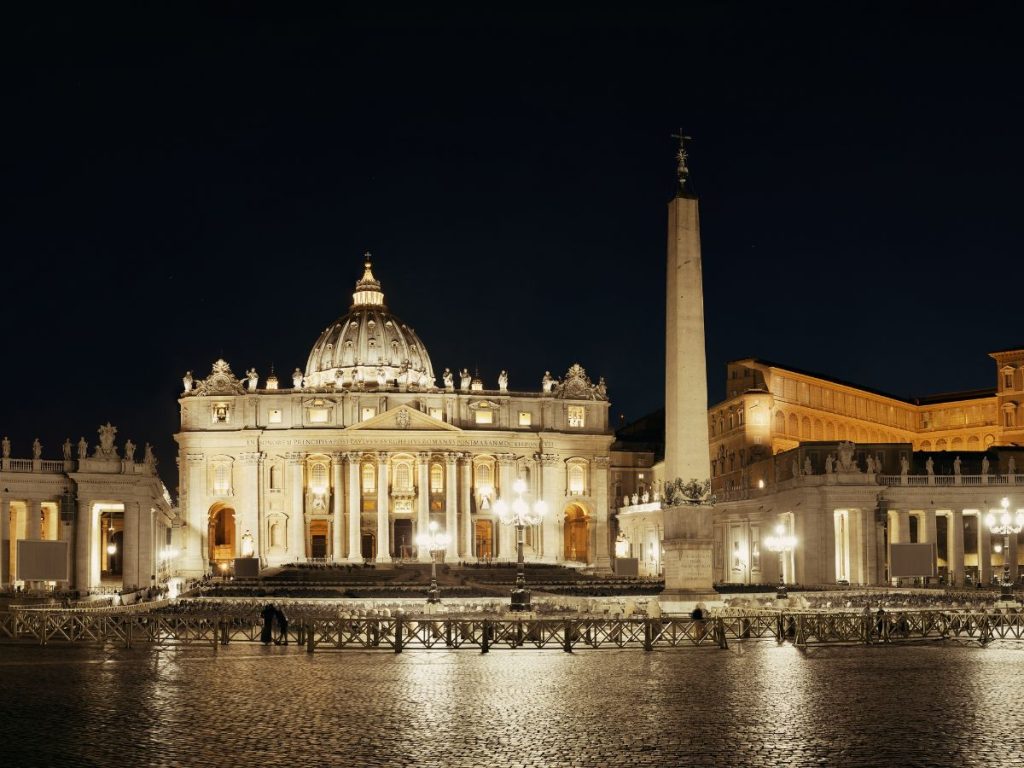
After the museums, we walked out into St. Peter’s Square.
At night, it’s lit up beautifully. Not crowded. Peaceful. The colonnade designed by Bernini (those rows of columns forming the oval shape) looks even more impressive at night.
We didn’t go inside St. Peter’s Basilica. They were closed by the time we finished the Vatican (honestly we were Vatican-ed out), but the square itself was worth the visit.
If you want to see inside the Basilica: Go at 7am opening (if you’re doing the early morning strategy), or before going to the Vatican Museums (if you’re following our itinerary), or skip it and just enjoy the square. The square is free, no line, and the exterior of the basilica is stunning on its own.
Dinner Near Vatican
Time: 8:30pm
After St. Peter’s Square, we grabbed dinner at a small restaurant near the Vatican. Nothing fancy. Pasta, wine, bread. Way better than lunch.
After Dark: Trevi Fountain + the Best Gelato in Rome
Time: 10:00pm to 11:00pm
After dinner, we wandered back toward our hotel through Rome’s quiet evening streets.
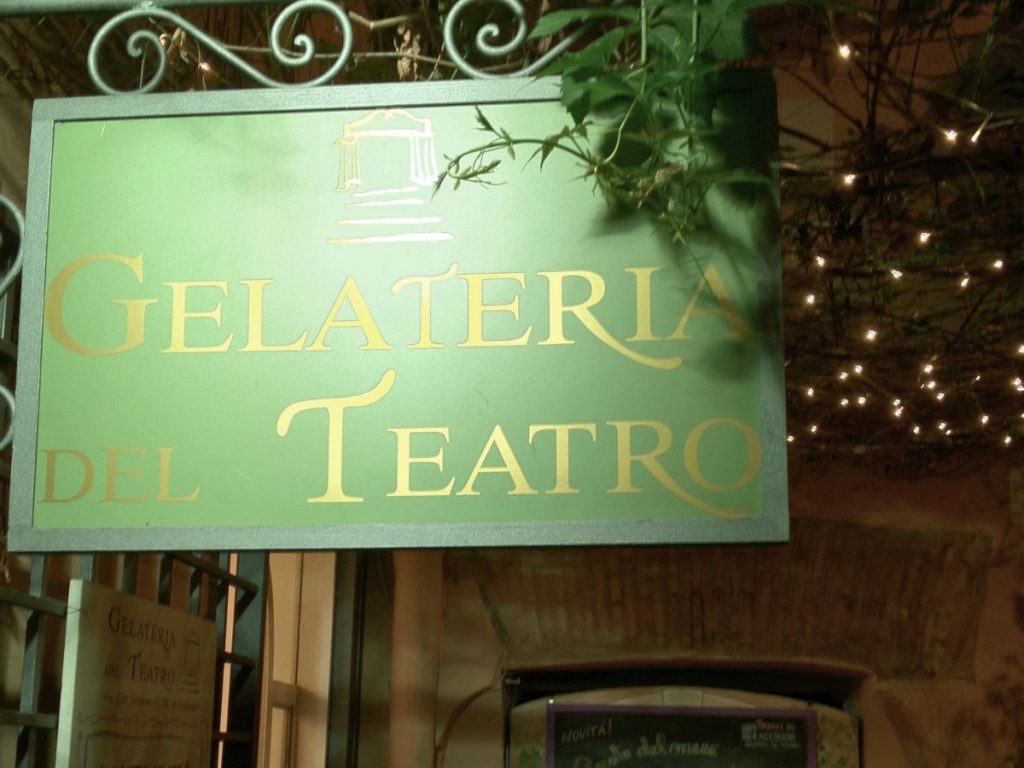
Stop 5: Gelateria del Teatro (The Accidental Discovery)
Time: 10:00pm
We weren’t looking for gelato, but then we found some at a tiny gelato shop with a line of locals.
This was the best thing we ate in Rome.
The chocolate gelato was the color of midnight, so dark it was almost black. First bite: actual chocolate. Not chocolate-flavored sugar milk. It coated your tongue, tasted like real cacao. Rich. Intense. Not too sweet.
Why did we think sharing a bowl was a good idea? Next time we’re ordering 2.
How to find real gelato in Rome:
- Natural colors (if the pistachio is bright green, walk away, real pistachio is brownish-green)
- Small shops with simple flavors (not 47 options including “birthday cake explosion” and “unicorn dream”)
- Locals in line (always a good sign)
Gelateria del Teatro location: Via dei Coronari, 65/66 (near Piazza Navona) (Marked on our map with exact location and directions.)
Stop 6: Trevi Fountain
Time: 10:30pm
The Trevi Fountain at night is better than during the day. Not an opinion. A fact.
During the day: Mobbed with tourists. Tour groups with matching hats. People trying to sell you roses and selfie sticks. Cannot get anywhere near the fountain without pushing through crowds. It’s stressful.
At night: Still busy, yes, but manageable. It’s lit up beautifully. More romantic, less chaotic. You can actually get close enough to see the sculptures clearly.
The fountain is baroque excess at its finest. Neptune in the center. Seahorses. Tritons. With water crashing over rocks. The whole thing was finished in 1762 and it’s still spectacular.The coin toss tradition: Throw a coin over your left shoulder with your right hand to ensure you’ll return to Rome. We did it. We went back a decade later, with twins in tow. Did we miss that part in the tradition?
Quick Facts
Pro Tip:
Come after 9pm for fewer crowds (we were there at 10:30pm and it was perfect). Or come at 7am if you’re an early riser (but who are we kidding, you’re not waking up at 6am on vacation).
Come after 9pm for fewer crowds (we were there at 10:30pm and it was perfect). Or come at 7am if you’re an early riser (but who are we kidding, you’re not waking up at 6am on vacation).
From the Trevi Fountain, our hotel was a 10-minute walk. We meandered through the quiet streets, climbed those damn Spanish Steps one more time (so much more exhausting after walking 12,000 steps), soaked in that bedroom bathtub, then slept like babies.
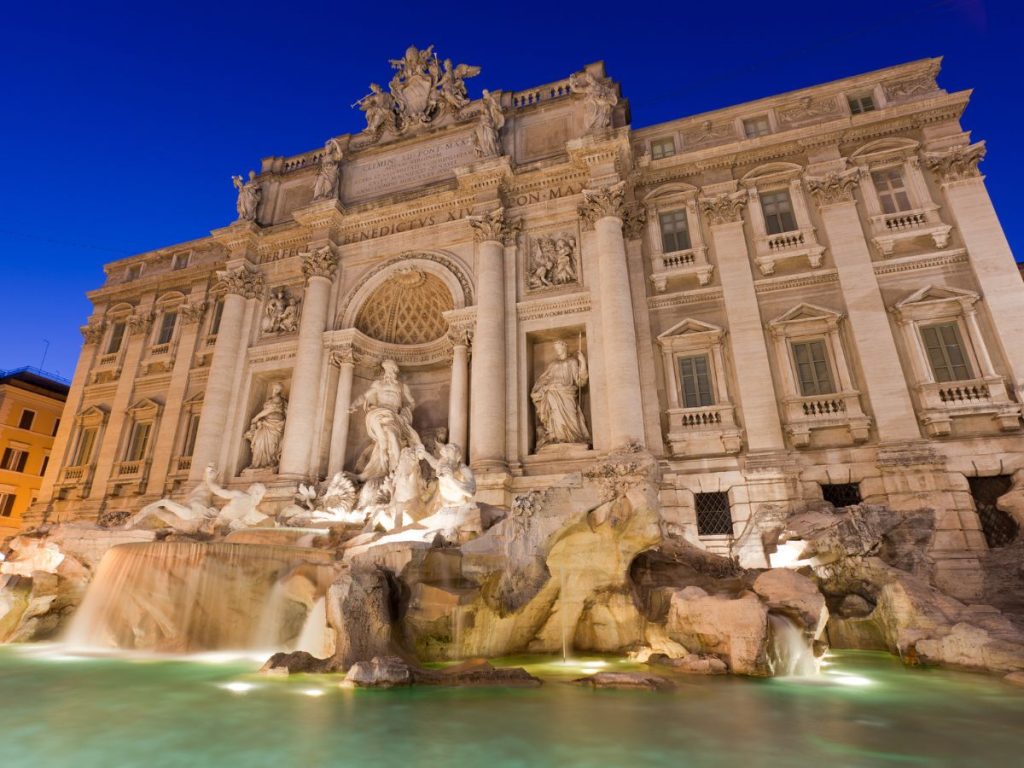
Total attractions seen in our 24 hours: Spanish Steps, Pantheon, Piazza Venezia, Colosseum, Roman Forum, Capitoline Hill, Vatican Museums, Sistine Chapel, St. Peter’s Square, Trevi Fountain, plus best gelato in Rome.
And we never felt rushed.
Planning Your Trip
Getting to Rome: Airport Options
Rome has two airports, and which one you fly into affects your timeline.
Fiumicino (FCO) – Main International Airport
Distance from Rome center: 30km (18 miles)
Best option: Leonardo Express train
- 32 minutes to Termini Station
- Frequency: Every 15-30 minutes
- Why it’s better: Direct train, no traffic, drops you at the main station with metro connections everywhere
Ciampino (CIA) – Budget Airline Airport
Distance from Rome center: 15km (9 miles)
Our choice: Taxi (flat rate to city center)
Budget option: Bus to Termini Station (takes 40 minutes plus waiting time)
Why we took the taxi: We had two massive 50-pound suitcases (starting a cruise the next day) and our hotel was at the top of the Spanish Steps. The bus would’ve added 90+ minutes and a logistical nightmare hauling luggage through Rome.
When to take the bus: If you’re traveling light (carry-on only) or staying near Termini Station. If you have big luggage or a hotel in the historic center, the taxi is worth it.For complete transportation cost breakdown, including all options, check our Rome 24-Hour Budget Breakdown post (comming soon).
Save Money Getting TO Rome
Transportation in Rome cost us €73, but our flights from London were even more. Want to know how we keep European flight costs under $400 roundtrip? Our FREE Flight Cost Saving Guide shares 15+ years of flight pricing data, including:
💰 The exact booking windows that save 40%+
✈️ Budget airline strategies for Europe
🧑💻 Which flight search sites actually work (and which waste your time)
Getting Around Rome
Rome’s metro system is shockingly simple: 3 lines (A, B, C). That’s it.
What you need:
- Metro Line A: Vatican, Spanish Steps, Trevi (Barberini stop)
- Metro Line B: Colosseum (Colosseo stop), Termini Station
- Metro Line C: Mostly suburbs, not useful for tourists
Tickets: Single rides or 24-hour passes available. Confusing part: The “24-hour” pass is only valid until midnight the day you buy it, not 24 hours from purchase. Buy it at 4pm Friday? Expires at midnight Friday, not 4pm Saturday.
We bought the day pass and used it once: From the Colosseum to the Vatican. Lesson learned for next time.
When to walk instead:
- Spanish Steps to Trevi Fountain (10 minutes)
- Trevi to Pantheon (10 minutes)
- Through historic center
- After dinner wandering (this is how we found the best gelato)
- When time is on your side
Rome is walkable. The historic center is compact. If Google Maps says “18 minutes,” you can walk it. Enjoy the journey. (Check our map above to see exact walking distances between attractions.)
When NOT to walk:
- When you don’t have time
- Colosseum to Vatican (45+ minutes, different sides of the city)
- Anywhere when it’s 95°F and humid in August
What Does Rome Cost?
Wondering about the budget? Check out our complete Rome 24-Hour Budget Breakdown (coming soon): What We Actually Spent post with every receipt, meal cost, and metro ride itemized.
What to Pack for One Day in Rome
Don’t overthink this. You’re there for one day.
Essential:
- Comfortable footwear (I prefer flip-flops but you’ll walk 6-8 miles, so you do you)
- Day pack/crossbody bag/purse for carrying stuff
- Refillable water bottle (Rome fountains have drinkable water)
- Phone charger plus portable battery pack
- Sunscreen, sunglasses, hat
- Light layers (remember the dress code for the Vatican Museums)
Download before you go:
- Offline Google Maps for Rome
- Your pre-booked tickets (screenshot or PDF, don’t rely on wifi)
- Rick Steves audio guide app (free, works for Colosseum, Forum, and Vatican)
- Translation app if you don’t speak Italian (Google Translate works)
Don’t bring:
- Big backpack (you’ll have to check it at Vatican, annoying and time-consuming)
- Drone (illegal in Rome, they’ll confiscate it)
- Selfie stick (illegal at major attractions)
Check out the unusual essentials we always pack here.
Quick Facts
Dress code for Vatican and churches:
Knees and shoulders covered. They’re strict about this. Tank tops and shorts won’t get you in. Bring a light scarf to cover your shoulders if it’s hot.
Knees and shoulders covered. They’re strict about this. Tank tops and shorts won’t get you in. Bring a light scarf to cover your shoulders if it’s hot.
For Cruise Passengers: Civitavecchia Port Logistics
Our quick Rome trip was the day before our Mediterranean cruise departed from “Rome.“
Except the cruise port isn’t in Rome. It’s in Civitavecchia, a town 80km (50 miles) northwest of Rome.
Getting from Rome to Civitavecchia:
- Train: 1 hour, runs every 30-60 minutes (BEST OPTION)
- Taxi: Not recommended unless you’re with a group of 6+
- Private transfer: Convenient but expensive
- Cruise line shuttle: Overpriced, just take the train
From Termini Station to cruise port:
- Buy ticket at Termini Station (credit cards work at machines)
- Board train to Civitavecchia (check departure boards for platform)
- One-hour ride (comfortable, easy, air-conditioned)
- Exit Civitavecchia station, follow signs for cruise shuttles
- Free shuttle bus to cruise terminal (runs frequently)
- Walk from shuttle drop-off to terminal entrance (about ¼ mile)
How much time to allow: We checked out of our hotel before noon and were on our cruise ship by 1:30pm. Why so early? Free “welcome aboard” champagne. Priorities.
That gave us plenty of time from hotel checkout to boarding the ship. Good thing since the train platform at Termini was far from the main departure board. We were in a full sprint to catch our train. If we had missed it? No sweat (except from the sprint). The next 2 trains still would have gotten us to our cruise on time.
Don’t cut this close. If your ship leaves at 5pm, leave Rome by 1pm at the latest. If you miss your cruise because you wanted to squeeze in one more espresso, that’s on you and the cruise line will not wait.Alternative strategy: Stay in Civitavecchia the night before your cruise. Hotels are much cheaper than Rome, and you’re already at the port. But you’re also staying in Civitavecchia. Which is basically a port town with nothing to see. We chose to maximize our time in Rome and stress about catching the train. Your call.
Need-to-Know
Mistakes We Made (So You Don’t Have To)
Mistake #1: The Rick Steves Lunch
Forgettable pasta. Should’ve asked the hotel concierge for a recommendation or grabbed pizza al taglio instead.
Lesson: Rick Steves is great for sightseeing logistics and audio guides. His food recommendations… not so much.
Mistake #2: Not Asking About the Metro Pass Fine Print
We bought our “24-hour” pass at 4pm thinking it was good until 4pm the next day. Nope. Expires at midnight the same day. Minor annoyance. We would’ve bought it earlier in the day if we’d known.
Lesson: Ask specifically how long the pass is valid. “24-hour” doesn’t actually mean 24 hours.
What We’d Do Differently Next Time
KEEP:
- Friday evening Vatican strategy (absolute game-changer)
- Pre-booking tickets (worth it to skip the lines)
- Wandering after dinner (found the best gelato this way)
- Staying in the historic center (convenient location was worth the cost for one day)
CHANGE:
- Skip Rick Steves restaurant rec, ask hotel concierge instead
- Buy metro pass earlier in the day (maximize validity period). Maybe skip the pass all together since we only used the metro once
ADD:
- St. Peter’s Basilica dome climb BEFORE going to the Vatican Museums (or do the early morning strategy next time)
- More time for unplanned wandering (our favorite moments were unplanned)
- More gelato. Because, when in Rome.
Frequently Asked Questions
Yes, if you’re strategic. We saw the Colosseum, Roman Forum, Vatican Museums, Sistine Chapel, Trevi Fountain, Pantheon, Spanish Steps, and more without feeling rushed. That said, if you can stay 2-3 days, you’ll enjoy it more. But if 24 hours is all you have, you can absolutely make it work.
The Colosseum line was 90 minutes when we were there. The Vatican was sold out when we went 10 years later. Pre-booking is 100% worth it. I’d hate to plan a trip to Rome to only spend time gawking at the Colosseum and the Vatican from the outside.
Do the early morning strategy: St. Peter’s Square at 7am, basilica at 7am, dome at 7:30am, Vatican Museums at 8:30am. Another option if you’re in Rome on a Tuesday or Thursday is to do the morning strategy (but starting at a more reasonable hour) then do the 1hr night time guided tour of the Colosseum between 8:30PM and 10PM. Alternatively, skip the Vatican entirely and spend more time at ancient Rome sites. You’ll still have an amazing day.
Yes, but adjust expectations. This itinerary is intense, and when we did it, was a lot of walking. You may want to rely more on taxis and public transit to make it happen. The Colosseum and Vatican are more interesting for older kids (8+). We took our twins when they were 6 and before going tried prepping them with age appropriate videos about Roman history. Even with some knowledge our twins were way more excited about the train ride in and out of the city. Though, wandering through the historic center and gelato hunting works for all ages. Consider shorter times at all attractions and maybe even skipping Vatican Museums with kids under 8 (they may not appreciate it and you may need a bottle of wine after).
Fiumicino (FCO) if possible. Direct train to city center, no traffic worries, more international flight options. Ciampino (CIA) is fine for budget airlines, but factor in taxi cost or extra time for the bus.
Yes, but watch for pickpockets in crowded areas. Colosseum, Vatican, Trevi Fountain, metro. Keep valuables in front pockets or crossbody bag worn in front. We felt completely safe the entire time, but stay aware of surroundings.
No. Tourist areas have plenty of English speakers. Learn “grazie” (thank you) and “per favore” (please). Google Translate app works well as backup. Most restaurant menus have English, and let’s be real who doesn’t have a list of fave Italian dishes?
We walked 6-8 miles over 24 hours. Comfortable shoes are absolutely essential. You can reduce walking by taking the metro more, but part of Rome’s charm is wandering the historic center on foot.
Not necessary for a quick Rome visit. Pre-booked tickets let you skip lines, and Rick Steves audio guide app is free. If you want deeper historical context, book a tour, but it’ll eat 3+ hours from your day. For Vatican especially, group tours take way too long when you’re trying to see an entire city in one day.
April-May and September-October (shoulder season): great weather, fewer crowds, lower prices. June-August: hot and crowded but longest daylight hours and Friday evening Vatican is available. November-March: cheapest and least crowded, but shorter days and potential rain.
Check out our Rome 24-Hour Budget Breakdown: What We Actually Spent (coming soon) post for a complete cost analysis.
🗺️ Save Our Rome Map
Want this entire itinerary in map form?
Save our interactive Google Map →
The map includes:
- Every location from this guide
- Our Friday evening Vatican strategy timing
- Walking routes and metro connections
- Honest reviews of what worked (and what didn’t)
- The gelato shop we found at 10pm
Tap any pin for costs, timing, and tips. Save the map to your Google Maps for offline navigation during your trip.
Want to know exactly what this trip costs? Check out our Rome 24-Hour Budget Breakdown: What We Actually Spent (coming March 17th) with every receipt itemized.
Questions about logistics or planning your own quick Rome trip? Send me an email.
Rome wasn’t built in a day, but you can try to see it in one.