Is Albania Worth Visiting in Winter With Kids? Read Our Full Honest Account
Albania • Destinations • Europe • Family Travel
July 21, 2026
“Why Albania?” they’d ask, as they tilted their heads. “Why not?” we’d reply. Albania in winter with kids? Not the kind of thing that evokes a response of “that makes sense.” We got raised eyebrows and a few polite versions of “hm, interesting choice.”
This post is what Albania in winter with kids looks like in practice: the route, what we found, what other guides get wrong, and whether the “why not?” holds up once you’re there.
December 2025 – 10 days, 4 people, southern Albania
Get My Free Flight Cost Saving Guide
Learn how I save $500+ on every Europe flight. Download my complete money-saving guide with booking windows, comparison tables, and the multi-city secret. Plus, you’ll be first to know when we publish new travel tips & guides.
Table of Contents
- Albanian Hospitality
- Albania by Season: What Changes and What Doesn’t
- What’s Open in Winter and What Isn’t
- What We Saw: Albania in Winter With Kids
- Who Albania in Winter Works For
- What We’d Do Next Time and What Else Winter Has
- Adding Albania to a Balkans Trip
- Before You Go: Practical Notes for Winter
- Frequently Asked Questions
Albanian Hospitality
There’s a tradition in Albania called Besa, a promise, codified in 15th century guidelines called the Kanun. At Bunk’Art 2, it’s displayed in the room documenting how Albanians sheltered Jews during World War II. And today this version of the quote lives on restaurant Mullixhiu’s website, an example of how it is still lived today.
Quick Facts
“The house of an Albanian belongs to God and to the guest. Every hour of the day and night, a man must be ready to receive a guest with bread, salt, and an open heart.”
— as displayed at Mullixhiu, Tirana
You’ll find examples of Besa throughout a trip to Albania: at a garage in Gjirokastër, in a hair salon before the sun rises, and as a warm reception at a restaurant you visit more than once because you experienced Besa.
Albania by Season: What Changes and What Doesn’t
Albania isn’t like Rome or London, where you can do the exact same trip no matter when you go. What you get to do in Albania depends almost entirely on when you arrive.
Winter (December–February)
In cities, a lot stays open. Tirana runs a full Christmas market through the season, the museums and restaurants stay open, and the streets carry an energy that doesn’t slow down for tourists.
Outside cities, on rural roads and at places that depend on summer vacationers, plan for seasonal closures.
But there’s a big payoff: no crowds at UNESCO sites, plus lower prices. The Benje hot springs had a handful of people in each pool, and Gjirokastër castle had maybe a dozen other visitors when we were there. In summer, I bet that number is not in the double digits.
Spring (March–May)
Spring is the best all-around window for the southern circuit, from what we’ve heard. The road to Berat, listed off-limits by rental companies in winter due to road conditions, opens up. The canyon at Benje has enough daylight for a longer hike. The rivers run crystal clear before the summer heat arrives. Still no beach crowds, and warm enough to move without your clothes saturated with sweat by the end of the day.
Summer (June–August)
Summer brings full beach season. The Albanian Riviera at Ksamil and Sarandë is beautiful and crowded. This stopped being a hidden gem sometime around 2023. If beaches are the goal, summer delivers. If an empty castle is the goal, summer takes that away.
The northern hiking routes (Theth, Valbona) hit peak season in summer. The Valbona-to-Theth trail is impassable any other time of year; mountain passes close from late October through May, and guesthouses close with them.
Autumn (September–October)
Autumn is the consensus sweet spot. Warm enough to swim, everything still open, crowds thinner than July. The sea stays warm into October along the Riviera. Go in September, if you can swing it.
What’s Open in Winter and What Isn’t
Every guide about winter in Albania includes a warning that “many things close.” None of them explain what actually closes with clarity.
In cities, little closes. Tirana, Gjirokastër, Sarandë: the restaurants, museums, markets, and shops all operate. Gjirokastër had several good restaurants open in December because the town has a year-round local population, not only summer visitors. Like Odaja, open even on Tuesdays in December, full menu available, full restaurant by 8PM. But there were still a few restaurants with high ratings that were closed and not marked as such on Google Maps.
Outside cities, along rural roads and at places built for summer trade: closures are real and Google Maps is unreliable. On our drive from Blue Eye to Butrint in late December, five places listed as open on Google Maps were shut. No signage, no update, only a locked door. Plan day trips around the understanding that roadside food stops may not exist. Better yet, pack snacks.
The two things that work better than Google Maps in winter Albania: WhatsApp (text ahead; most businesses respond quickly) and local knowledge from wherever you’re staying. Our host at Stitch & Stone in Gjirokastër knew which restaurants had closed for the season and which hadn’t. That information was worth more than any app.
One more winter note: sunset in late December falls around 4:30 PM. That changes how you plan day trips. Blue Eye and Butrint in the same day works, but an early start is not optional.
What We Saw: Albania in Winter With Kids
Our route: Tirana first for two nights, south to the Durrës coast for three, then on to Gjirokastër for the final three nights, and finally back to Tirana for the flight home. Ten days total.
The route below covers the full circuit.
Wanna know how much it costs? For every meal, every entrance fee, every hotel, see our Albania family trip cost breakdown.
Tirana (2 nights)
Start here. The capital earns two (or more) full days in any season.
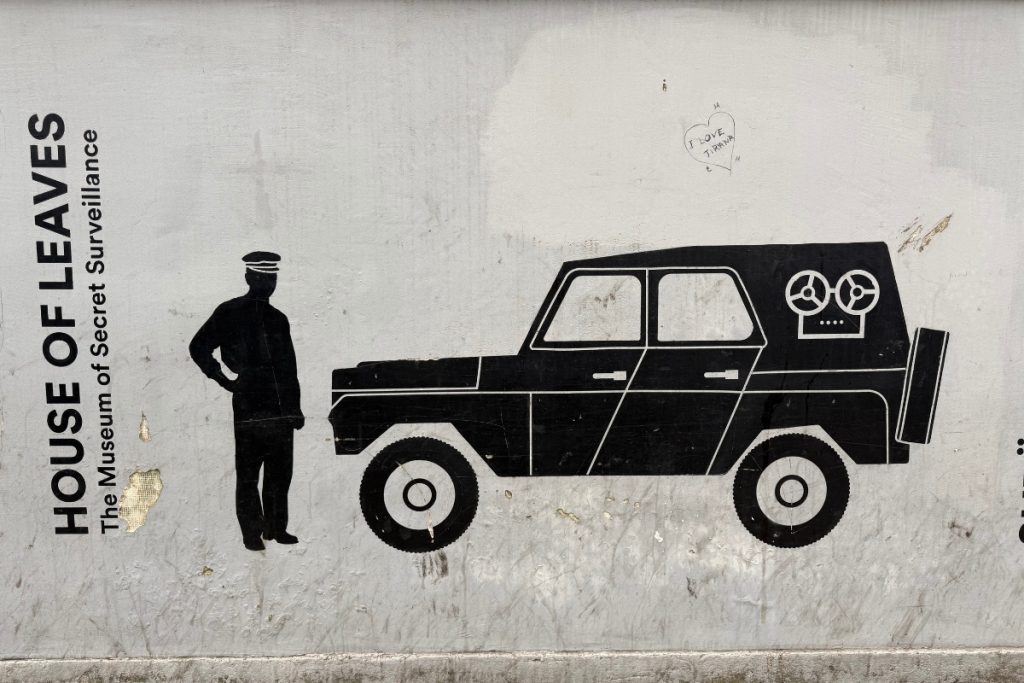
House of Leaves ranks among the best museums in the Balkans. The former headquarters of the Sigurimi secret police, now a museum about surveillance and life under Albania’s communist dictatorship. The exhibits are specific: actual equipment, files kept on ordinary citizens, and a building that still feels like eyes are watching you. For kids old enough to understand what a secret police does, this lands. Even better, kids are free.
Bunk’Art 2 covers the same era through a different lens: the fate of Albanians sent to labor camps. Some overlap with House of Leaves, but enough additional detail to earn its own visit.
Both kids asked more questions leaving those museums than they had the entire week before.
For dinner, Mullixhiu. This restaurant made the World’s 50 Best to Watch list and serves a tasting menu built around Albanian ingredients and techniques that most tourists never see. Book ahead at mullixhiu.al..
A pleasant surprise: Albania has Christmas markets. Skanderbeg Square, the heart of the city center, fills with food stalls, boutique stalls, and mulled wine. Worth the walk on a December evening, but not worth building your whole trip around.
The Durrës Coast (3 nights)
We stayed at the Mövenpick Hotel Lalëz, 40 minutes north of Durrës city, with a spa, white sands, and an indoor pool (and an outdoor one in the summer). The perfect place to reset after two full days of museums and walking in Tirana.
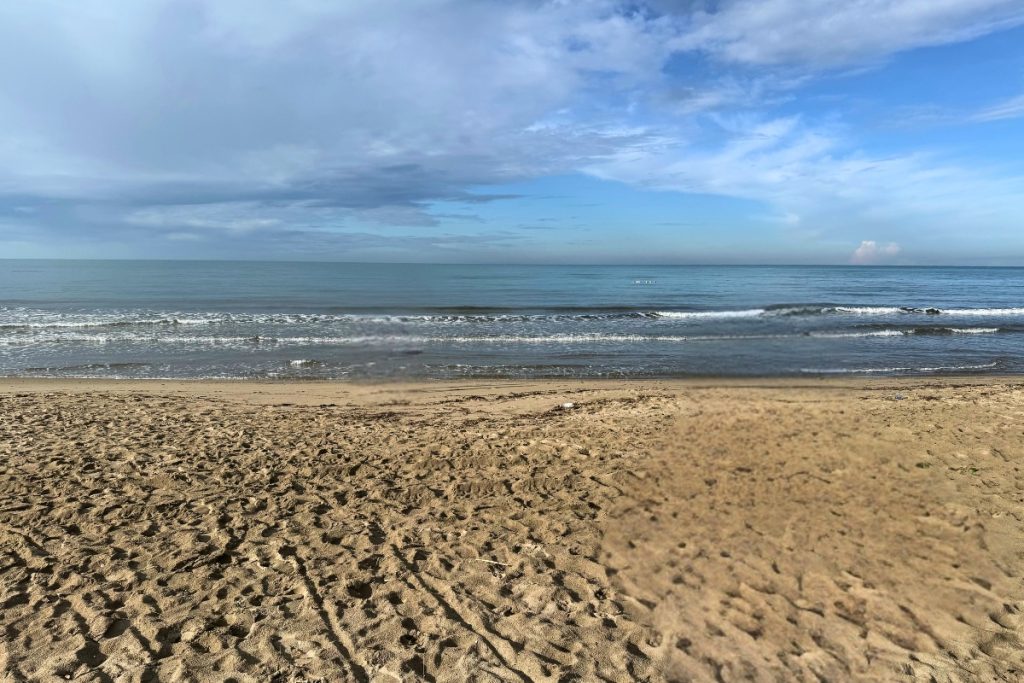
One thing to note for winter: the hotel sits in a resort area with nothing else nearby open. In summer, the restaurants and shops around it operate. In December, they were closed. We ate every meal at the hotel. The food was fine and expensive by Albanian standards. (See our full budget here – Coming in October) Factor that in if you go in winter.
Still, Durrës city itself is worth an afternoon, not a dedicated overnight. The Roman amphitheater, a 2nd-century structure in the middle of a residential neighborhood and free to walk around, is remarkable for how unguarded it is. The Venetian Tower, the mosque, the walkable old streets, and their own Christmas market. We tried walking to the Royal Palace, but a stray dog made it clear we should leave. We did.
In short: the hotel was beautiful. The isolation in winter is real. In summer, when the surrounding restaurants and beach bars operate, this would be a different stop entirely. In December, it worked as a relaxing Christmas base. Not much more than that.
Gjirokastër (3 nights)
The best part of the trip.
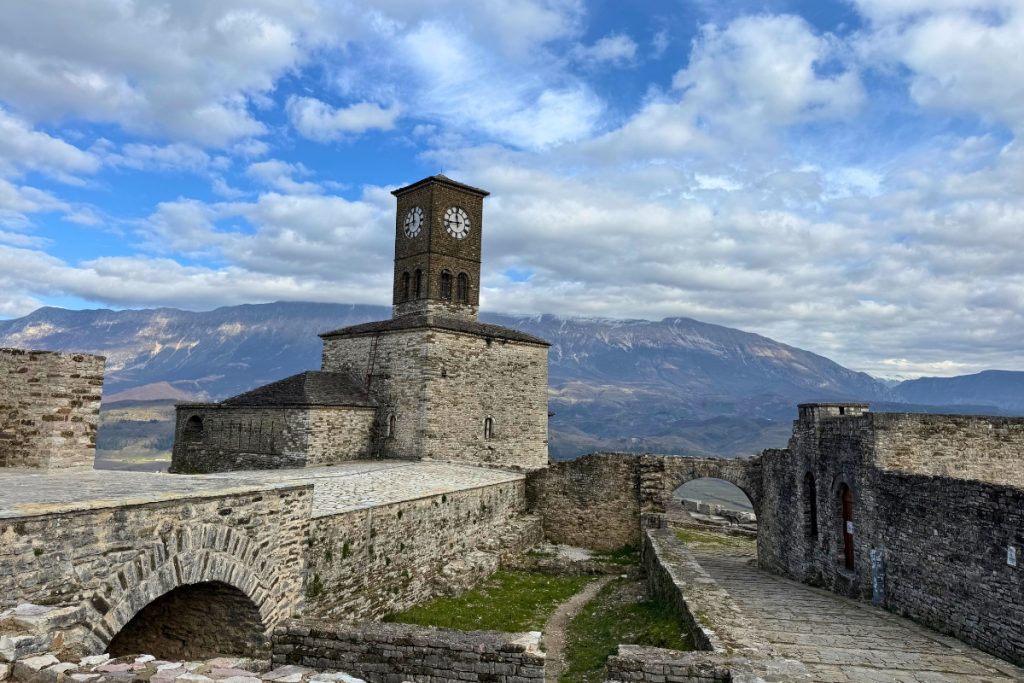
Geography matters. Gjirokastër sits on a steep hillside. The modern city is at the bottom. The castle, the old town, and the best restaurants are at the top. Stay near the top. The roads to get there are narrow and steep. Two cars cannot pass on a road marked as two-way, but once you’re up, the neighborhood is walkable (though hilly) and the views that run to the valley below are stunning.
We stayed at Stitch & Stone Suites: a boutique property with heated bathroom floors, three beds in one room (one queen, one twin in a loft, and one twin sleeper sofa), and breakfast included down the street at Café Furra. The heated floors were a highlight. After an evening walking around the city, the bathroom became a gathering spot to warm up.
When we arrived in Gjirokastër with a low tire, the host sent her associate to meet us, he drove us to a garage, and there they found a bent rim. They hammered it out on the spot. Total charge: €3, which the host paid. We insisted to reimburse. She politely declined.
Food
For breakfast each morning, Café Furra handled it. Order the tarhana, a local winter dish made with butter, bread, and pancetta, clearly created to keep you warm during cold mountain winters. One of the kids ordered the jelly donuts every single morning. Not really a local thing, but absolutely worth eating if you prefer a sweet breakfast.
For dinner: Odaja. We went twice. The staff remembered us the second night without being told. The meatballs with potatoes, the tzatziki, the tzatziki, the qifqi (crispy rice balls), the pork. Everything was excellent. Shëndeti for dessert, a walnut cake that both kids loved. (I immediately downloaded a recipe for it.) Two of the best dinners of the year at any price.
Benje Hot Springs
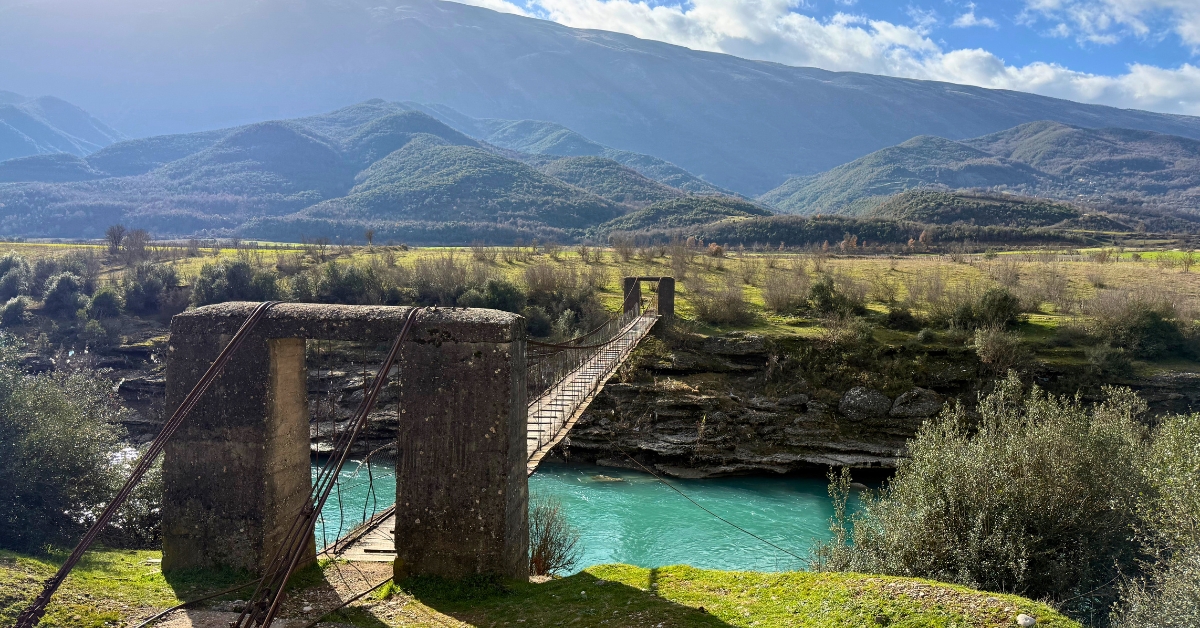
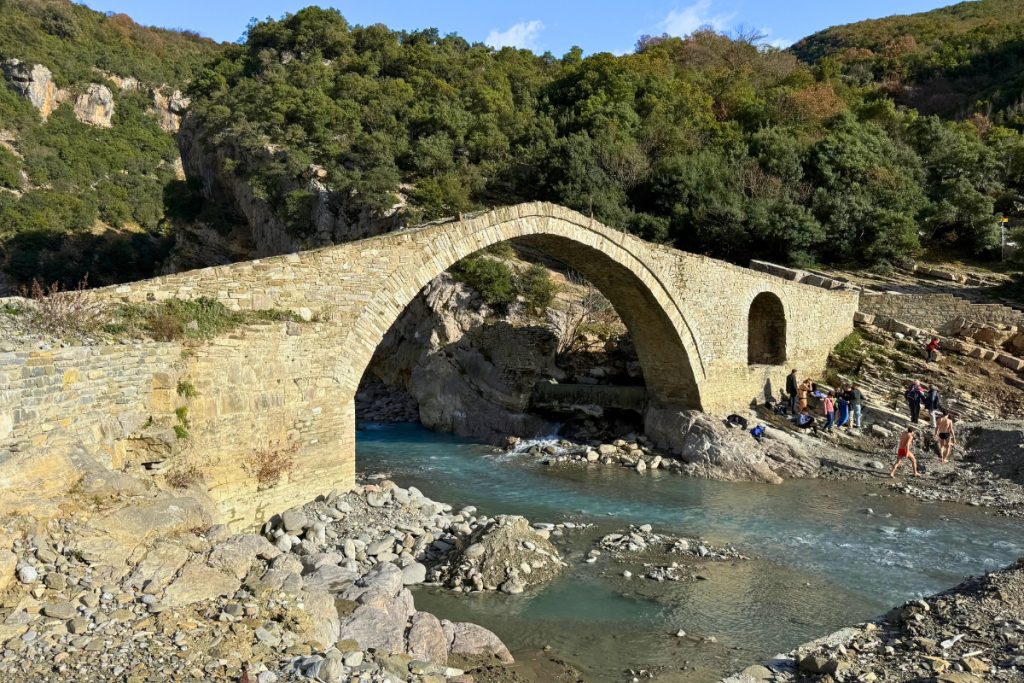
Also worth a day trip: the Benje hot springs, a warm river in a canyon, free to enter in winter. The hike down is short and well-marked. The steam rises off the water. The kids rated the water temperature “not warm enough” and the hike “not long enough.” Both were accurate. Bring towels and suits. The springs look small on the map but have space to spread out. One caution: the bridge to get across to the springs has zero railing. It’s wide enough, but if you have young kids who like to run, hold their hands, carry them, or skip the springs and enjoy the canyon from this side.
Blue Eye and Butrint
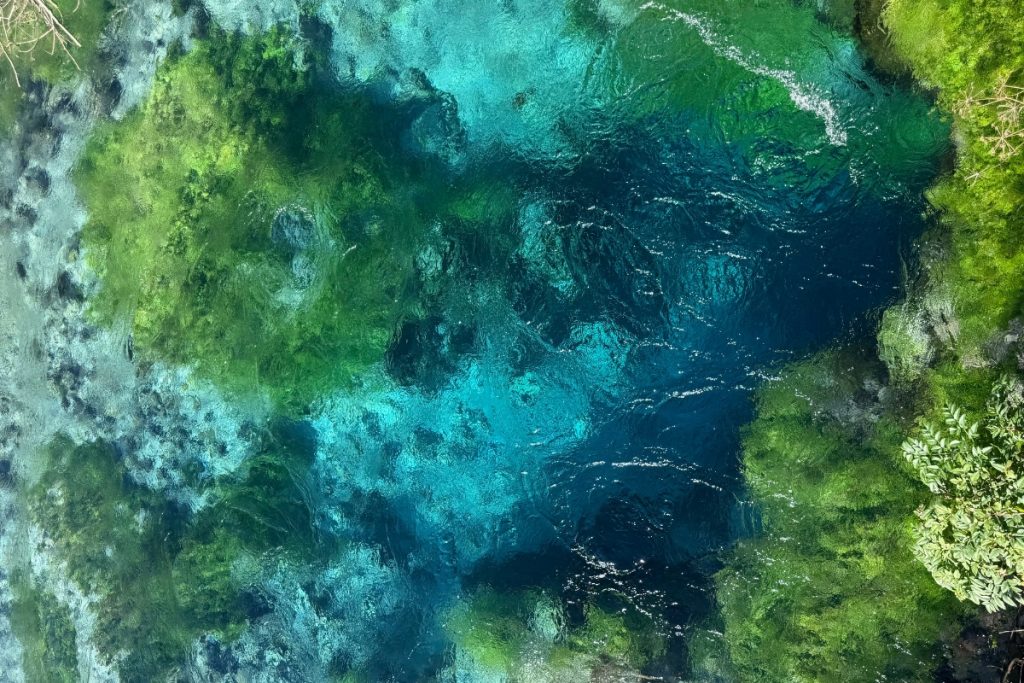
Then: Blue Eye and Butrint paired for one long day trip. An early start is not optional. The drive to the Blue Eye crosses mountain passes that may be icy, so take your time. The Blue Eye itself is a natural spring, deep and startlingly clear, with colors that look like an artist designed a screensaver. Worth every cent. The paid parking lot right at the entrance costs 300 LEK; the free lot is a 20-minute walk. Entry is 50 LEK per person.
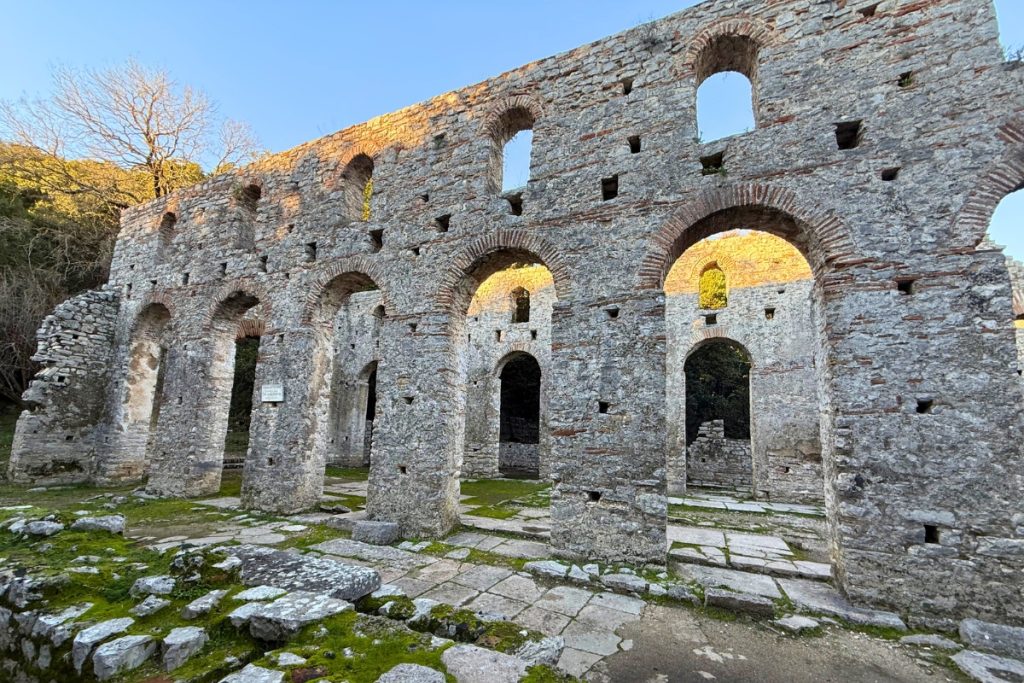
Butrint is a full archaeological park: Greek, Roman, Byzantine, Ottoman layers of history in one site, well preserved and almost entirely empty in December. 1,000 LEK per adult, kids free. On the drive back along the coast toward Sarandë, we witnessed the most incredible sunset. We pulled over in an inconvenient spot for everyone behind us (sorry, not sorry) and took the most memorable photos. Completely unexpected, and another reason to justify our “why not.”
Finally, Gjirokastër Castle on the last morning: 800 LEK for two adults, kids free (approximately €8). The kids wanted to explore every room and march up and down every staircase. We eventually had to drag them out two hours later so we could get back to Tirana before dinner.
Get My Free Flight Cost Saving Guide
Learn how I save $500+ on every Europe flight. Download my complete money-saving guide with booking windows, comparison tables, and the multi-city secret. Plus, you’ll be first to know when we publish new travel tips & guides.
Who Albania in Winter Works For
For families planning Albania in winter with kids in the 8+ age range: the history content is strong. Bunkers, secret police headquarters, and communist-era museums bring history to life. For families with kids of all ages, the castle explorations work, and the water features (the hot springs, the Blue Eye, beach sunsets) give them a striking view on nature. And then there’s the food: meatballs, tzatziki, walnut cake. It lands without negotiation.
For couples and solo travelers: the empty sites are the main argument. You will walk through Butrint without crowds, explore the Gjirokastër castle with a handful of other visitors, and enjoy restaurants where the staff learns your name.
Who it doesn’t work for: anyone whose main goal is tanning on beaches. The coastline is beautiful year-round. The water is cold and the beach towns are closed. Come back in September (or summer if you’re brave).
What We’d Do Next Time and What Else Winter Has
Next trip, any season: We tentatively planned Shkodër for the lake and the fish restaurants, and Peshkopi for its thermal baths, but ran out of time. Both would be worth adding no matter the season.
Next trip, warmer season: Berat, first. The road there is listed off-limits by rental companies in winter due to road conditions, and we respected that (especially with a leaking tire already). A UNESCO city called “the city of a thousand windows” earns a separate trip. Sarandë for sunset views from the coast: we drove through on the way back from Butrint and saw exactly what we’d missed. The canyon at Benje with more daylight for the full hike. A better car with 4WD capability for more of the roads.
What winter Albania has that we didn’t try: Skiing near Korçë and Dardha for around €15 a day for lift tickets. The eastern highlands near Korçë have operational ski resorts accessible by road through winter. Pogradec on Lake Ohrid. The northern mountain routes (Theth, Valbona) are not winter options; passes close and guesthouses shut. For a full local breakdown of winter options, the albaniavisit.com winter guide covers the full menu.
Adding Albania to a Balkans Trip
From Greece: on the drive back from Butrint we passed through Sarandë and could see Corfu across the water. That’s the route: Corfu for a few nights, then the ferry to Sarandë, head north through Gjirokastër to Tirana, and fly home. The Sarandë–Corfu ferry runs year-round, twice daily in winter.
From Montenegro: Kotor to Shkodër to Tirana is the classic north-to-south route. In winter the coastal roads north of Shkodër can be rough, and the beach towns along the way are closed. Spring is the better window for this one.
Standalone: we flew Wizz Air from Barcelona in December. Tirana has direct service from more than 20 European cities: London, Paris, Rome, Berlin. You don’t need a connection from anywhere in Europe, and in December you won’t need to book far in advance either.
Before You Go: Practical Notes for Winter
Booking, Communication, and Local Services
Before you go, a few things that matter in winter. Book accommodation in Gjirokastër and smaller towns through Booking.com or Airbnb, not Chase Travel or similar portals; those portals use Expedia but don’t pass your information to the host, and small properties need to reach you before arrival to arrange check-in and parking. (There aren’t traditional “hotels” in Gjirokastër.) Use WhatsApp to confirm hours before driving anywhere; Albanian businesses communicate through it and respond quickly. A message before a 40-minute drive is worth 30 seconds.
For any service, check Instagram and Facebook for local providers rather than anything with a website. They’re cheaper, they cater to locals, and they work hard: I found a hairdresser through a Facebook shout-out and messaged her on WhatsApp. No availability during our stay. She asked for my schedule and booked me in at 7:30 the next morning. She welcomed me in and made it work.
Cash, Water, and Where to Stay in Gjirokastër
Get cash. Better yet, bring cash. Everyone accepts Euros. ATMs exist in cities but charge fees, and many restaurants, parking areas, and small shops don’t take cards. The 100 LEK coin is roughly €1, your mental benchmark for everything. Tap water is not potable, but bottled water costs almost nothing.
Also, if you stay near the top of Gjirokastër rather than the bottom of the hill, you’ll save a difficult drive or walk every time you want dinner. The castle, the restaurants, and the best views are all on the upper hill. Finally, pack a real coat. Temperatures in the south in December run 6–15°C at sea level, and higher elevations are colder.
So, why Albania? Ten days with two 10-year-olds. We walked through a 2,000-year-old archaeological park, ate at a restaurant on the World’s 50 Best to Watch list, stood in a 14th-century castle with almost no one else inside, and ate at restaurants where the food was excellent and the bill kept coming in lower than expected. “Why not?” It earned its place. Albania isn’t Spain, France, or Italy. And that’s exactly the point.
More From Albania
Want the full cost breakdown for this trip? How Much Does Albania Cost? The Honest Per-Day Breakdown for Familieshas every receipt, every category, every number.
We also stayed at the Tirana Marriott twice on this trip. The full review, including the upgrade we didn’t ask for, is here.
Frequently Asked Questions
Yes, with the right expectations. In cities (Tirana, Gjirokastër) everything is open, the museums are excellent, and the restaurants are better than you’d expect. Outside cities, on rural roads, seasonal closures are common and Google Maps hours are often wrong. Kids in the 8+ range who respond to history content (communist museums, castle exploration, archaeological parks) will find winter Albania genuinely engaging. Kids whose main goal is beaches need to come back in September.
In cities: everything. Tirana’s museums, restaurants, and markets all operate year-round. Gjirokastër’s old town, restaurants, and castle are open. Butrint and the Blue Eye operate in winter. Outside cities, especially along rural coastal and mountain roads, many seasonal businesses close from November through March. Use WhatsApp to confirm hours before driving anywhere.
Spring (March–May) is the best overall window for families who want to do the southern circuit: the Berat road opens, days are longer, and the rivers run at their best before summer heat. Autumn (September–October) is the consensus sweet spot for warm water and thinner crowds. Winter works well for history-focused trips with older kids. Summer delivers beaches but brings the most crowds to the Riviera.
Yes. Albania has a strong cultural tradition of hospitality toward guests. Albanians are warm and go out of their way to help. The main practical concern in winter is road conditions: mountain roads can have black ice, and some routes are impassable. In cities and on main roads, safety is not a concern. Stray dogs exist throughout the country; most are calm and used to people.
Yes. Public transport exists but is unreliable and doesn’t connect well to the southern sites. Rent a car, ideally with 4WD capability for roads outside the main cities. Budget around €130–150 for 10 days through a major rental company.
Roughly €50 per person per day in-country (excluding flights), covering mid-range accommodation, food, transport, and activities. The full receipt for our 10-day family trip, every meal and every entrance fee, is in our Albania family trip cost breakdown.