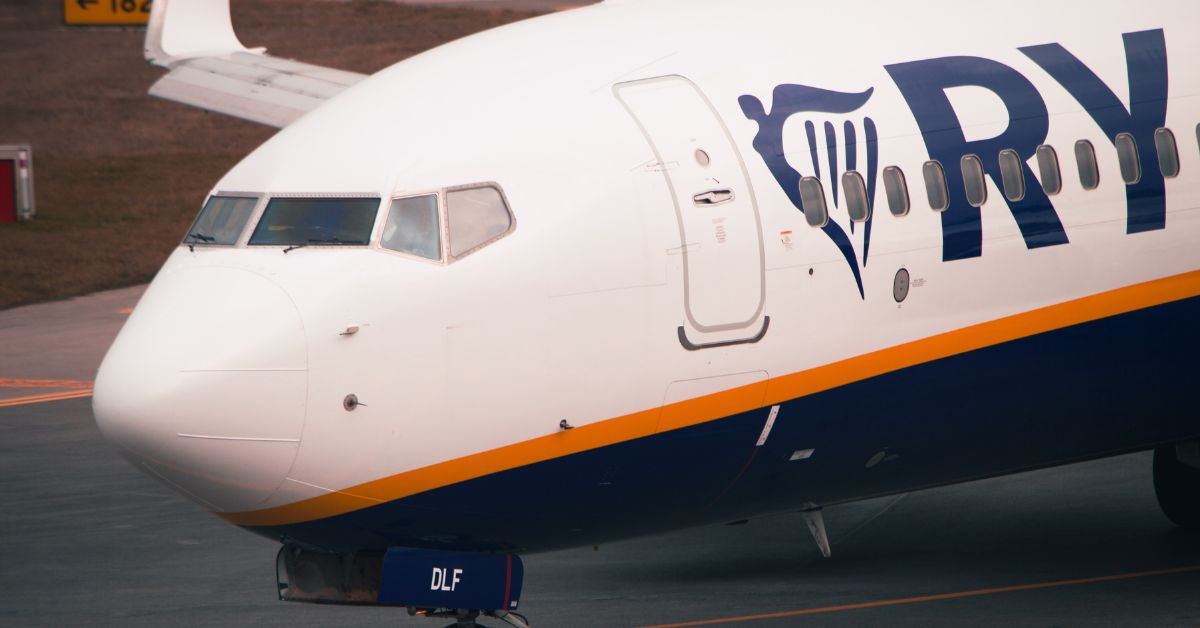
The first time I booked a budget airline flight in Europe for myself, I did everything right.
2011. I read all the rules, arrived three hours early, carry-ons matched the requirements, and boarding passes were printed. We cleared security and settled in to wait for our departure gate to be posted.
Fifty-four minutes before the flight: Gate 43.
A dozen people erupted from their seats and sprinted. Full sprint. No announcement. No alarm. They just ran.
We looked at each other, gathered our things, and walked quickly toward the gate. Neither of us was willing to call it running.
What I’d forgotten after seven years away from Ryanair: no assigned seating. First to the gate picked seats first. We ended up 30th in the queue (not bad for a flight with over 150 people). While we waited, the gate agent walked the line, pulled out bags that looked too big, dropped them in the sizer, and collected fees on the spot.
That trip is where this checklist started. That trip was also to Norway on £43 tickets. More on both shortly. Fourteen years and 52 low-cost carrier flights later, I still choose to fly them. Everyone grumbles about Ryanair and the other budget airlines in Europe: the fees, the rules, the ways they’d get you if you weren’t careful. The warnings are right. But after 52 flights, I haven’t paid an unexpected fee in years.
In This Post
- How the Budget Airline Business Model Works
- What Budget Airlines Actually Cost: Two Real Examples
- Can You Use Budget Airlines If You’re Flying From the US?
- The Fee Strategy That Works for Families
- When Budget Airlines Don’t Make Sense
- The Rules You Cannot Break
- The Secondary Airport Strategy
- What I’d Tell a First-Timer
- The Budget Airline Checklist
Get My Free Guide
Learn how I save $500+ on every Europe flight. Download my complete money-saving guide with booking windows, comparison tables, and the multi-city secret. Plus, you’ll be first to know when we publish new travel tips & guides.
How the Budget Airline Business Model Works
Budget airlines in Europe operate completely differently from US carriers. Understanding the model makes the fees feel less like traps and more like choices you’re making deliberately.
How Low Are Ryanair and easyJet Base Fares, Really?
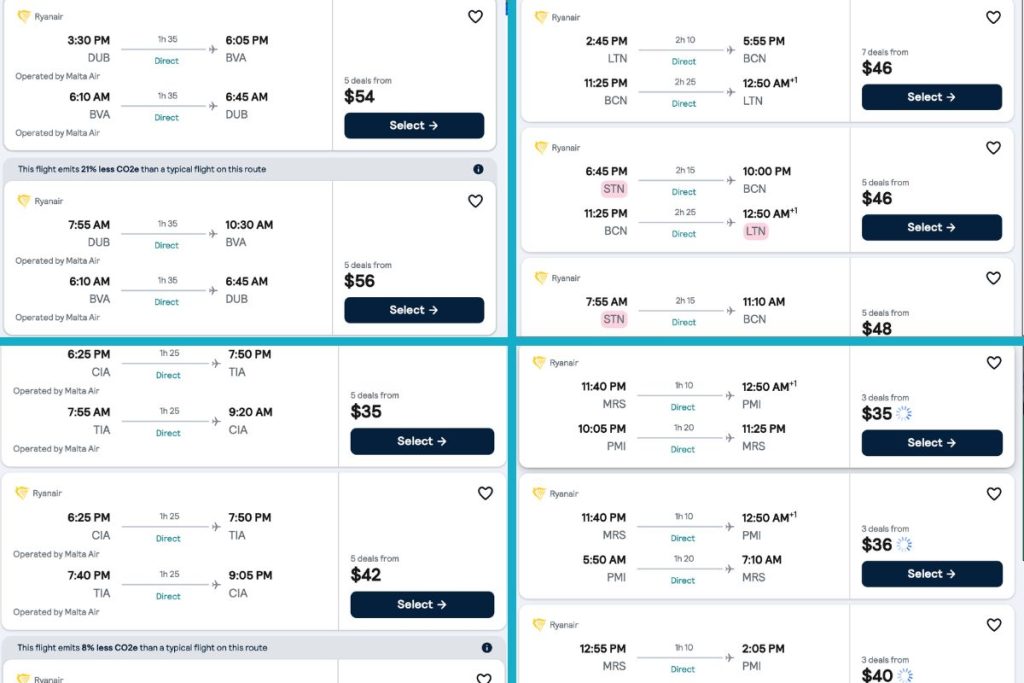
In the US, “budget” often means $200 instead of $300. European low-cost carriers price base fares at levels that feel impossible the first time you see them. Some real fares from our flight history:
- €29 to Albania from Marseille (€500 for a family of 4 with seats and a checked bag, still cheaper than legacy)
- £60 to Barcelona
- £91 to Denmark
- £86 total for two people to Norway, return
- $100 per person from Carcassonne, France to London Stansted (family of four: $399 round trip, including one 20kg checked bag and reserved seats)
None of these are sale prices. These are normal fares booked at reasonable windows.
Everything Else Costs Extra
The low base fare is not the total price. Here’s the full fee menu across the major carriers:
| Fee Type | Typical Range | Notes |
|---|---|---|
| Small personal item (under seat) | Free | Must fit strict size requirements. They measure at the gate. |
| Carry-on bag (overhead bin) | €10–€25/person | Sometimes bundled with priority boarding |
| Checked bag | €20–€55/bag each way | Ryanair charged us €40 each way Barcelona to London, more than our base tickets |
| Seat selection | €5–€30/person | Skip this on short flights if you can |
| Priority boarding | €6–€20 | Often bundles with one carry-on bag |
| Airport check-in (not online) | €20–€55 | Completely avoidable. Check in online. |
| Food and drinks on board | €4–€10/item | Bring your own from the airport grocery or cafe |
The fees add up. Even so, total cost after fees usually comes in well below what a traditional carrier charges for the same route. European low-cost carriers also fly to smaller cities worth visiting that major airlines skip entirely: Nimes, France (the Pont du Gard), Cologne (the cathedral), Malmö, Sweden, Lapland, Finland. The budget airline network opens up a different Europe.
They Fly to Secondary Airports: Sometimes That’s a Feature
Ryanair doesn’t fly to Rome Fiumicino. They fly to Ciampo, a 45-minute bus ride to central Rome. Paris? Not Charles de Gaulle. Beauvais, 50 miles north. More on the secondary airport strategy, and why it’s not always a problem, in the section below.
On-Time Performance Is Better Than You’d Expect
Ryanair’s business model requires 25-minute turnarounds between flights. Delays cascade through their entire schedule, so staying on time is a financial necessity. Across 44 European low-cost carrier flights, we’ve had maybe four delays over 30 minutes, and only one of those was memorable. (That day, every airline at that airport was delayed due to weather.) That record beats several full-service airlines we’ve flown.
What Budget Airlines Actually Cost: Two Real Examples
Enough theory. Here’s what two real trips actually cost, start to finish.
London Stansted to Oslo Rygge, Thanksgiving 2011 (Two Adults)
That gate sprint story from the intro? This was the flight. Ryanair from Stansted to Oslo Rygge: £85.98 total for two people. That’s £43 each, about $55 per person. We booked it over US Thanksgiving weekend because for Europeans, that week means nothing special: no holiday demand, normal prices. We pulled up Skyscanner, searched “London to everywhere,” and booked before we could talk ourselves out of it.
Who wants to go to Norway in November?
Quick Facts
London Stansted to Oslo Rygge | 2 Adults:
Thanksgiving Weekend, 2011 – Ryanair return
£85.98
Total for two people, both directions
Plus ~£30 train to Oslo city center
Norway Was Incredible. Norway Was Also Brutally Expensive.
The cheap flight was not a preview of what was coming.
Norway has a reputation for being expensive. My dad used to travel there for work and warn me constantly, but warnings don’t prepare you for the reality. A can of soda at a convenience shop near the bus stop: approximately $7. We don’t even drink soda. We double-checked the price anyway. We weren’t misreading it.
The best value meal we found across four days: Sushi City in Oslo. Twenty-four pieces for 225 NOK, roughly $38 for two people at the time. A genuine bargain by Norwegian standards. We went back twice.
The whole trip cost roughly £1,100 to £1,270 for two people over four days, including flying up to Tromsø in the Arctic Circle, a Northern Lights tour, and one tasting menu dinner. (The reindeer was worth it. I will not apologize.)
The cheap flight got us there. Norway made sure the rest of our budget was aware of its presence.

Quick Facts
The Point:
A cheap flight to an expensive destination is still a cheap flight. The savings are real even when the destination costs more once you land.
Barcelona to London Stansted, Summer 2025 (Family of Four)
Fast forward fourteen years. Same airline, different trip: four people, two kids, one round trip from Barcelona to London on Ryanair in the summer of 2025.
Quick Facts
Barcelona to London Stansted | Family of 4:
Round trip, Summer 2025 – Ryanair direct both ways
$651
Base fares + seats + fast track security both airports
Under 2 hours each direction | No checked bags
We booked this one 34 days out. Direct flight both ways, under two hours each direction. We paid for reserved seats (neither of us holds a passport from Spain or the UK, which means longer passport control lines on arrival. Reserved seats let us board first and move faster through the process). We added fast track security at both airports too. The lines in Barcelona? We didn’t need it. At Stansted? Heaven sent.
For comparison, the same route on a legacy carrier was running $200 to $230 per person at the time ($800 to $920 for four people). Our $651 all-in beat that by $150 to $270, and included seats and fast track. See how we spent our 48 hours in London with the kids.
Can You Use Budget Airlines If You’re Flying From the US?
For the most part, European budget airlines operate within Europe. Ryanair, easyJet, Wizz Air, Vueling, and Transavia don’t fly transatlantic routes. So if you’re based in the US, these carriers aren’t your first flight. They’re your second.
Two exceptions worth knowing:
- PLAY Airlines flies transatlantic from the US to Iceland and onward to European cities. As a true low-cost carrier with transatlantic routes, PLAY is the closest thing to a budget airline for the crossing itself.
- Icelandair isn’t a traditional low-cost carrier, but you can book a bare-bones transatlantic fare without meals or bags, similar to how budget airlines price their tickets. Upgrade packages that include meals and bags are available but optional.
The Strategy for US-Based Travelers
Flying low-cost carriers probably won’t save you money if you’re flying from the US to one major European city and staying there the whole trip. For that, book the best transatlantic fare you can find and leave it at that.
The strategy starts working when your trip covers more ground:
- Multi-city trips: Fly transatlantic into a major hub city. London, Barcelona, Dublin, Paris, and Frankfurt all have dense low-cost carrier networks. From there, use budget airlines to reach your other destinations. Want to see Dublin, Barcelona, and Rome in two weeks? A legacy carrier gets you to Dublin. Ryanair gets you the rest of the way for a fraction of what three transatlantic tickets would cost.
- Smaller destination cities: If your final destination is served by a low-cost carrier but not a major airline, fly transatlantic to the nearest hub city and connect on a budget carrier. Nimes, Lapland, and Malmö are not direct from New York. They are direct from London or Barcelona.
We’ll do a full breakdown of how to plan a multi-country Europe trip around this strategy, including which hub cities give you the most cheap flights in Europe, in an upcoming post. Sign up below and we’ll send it your way when it’s live.
Get My Free Flight Cost Saving Guide
Learn how I save $500+ on every Europe flight. Download my complete money-saving guide with booking windows, comparison tables, and the multi-city secret. Plus, you’ll be first to know when we publish new travel tips & guides.
The Fee Strategy That Works for Families
Years of trial and error produced a system that keeps our fees consistently low without making the experience miserable. Here’s what works for a family of four. Before you hit purchase on your next flight, run through the checklist at the bottom of this post to make sure you’ve accounted for everything.
One Personal Item Each: Free
A backpack that fits under the seat costs nothing on every low-cost carrier. Pack four days of clothes, minimal toiletries, a phone charger, and your kid’s entertainment. A well-packed small backpack handles it. We’ve done it dozens of times.
The right bag matters more than almost anything else in this strategy. Budget airlines measure bags at the gate. The sizing box is not decorative, and the agents are not flexible. A backpack sized to fit every European carrier’s personal item requirements pays for itself on the first trip.
Free Personal Item Each, or One Paid Carry-On or One Paid Checked Bag for the Family
Four people don’t need four overhead bags. For a trip of four to six nights, we travel with one shared carry-on for toiletries and most of our clothes, and everyone carries their own personal item backpack. That’s one bag fee: €10 to €25 total, not per person.
For trips of seven or more nights, we book one medium checked bag (generally 20kg). That’s enough room for the whole family. Trips over two weeks mean a laundromat stop somewhere in the middle.
A portable luggage scale is non-negotiable for this strategy. Budget airlines enforce weight limits strictly, and being 200 grams over costs the same as being 2 kilograms over. Ours weighs four ounces and has paid for itself on every single trip.
Skip Seat Selection: Especially with Older Kids
Seat selection runs €5 to €30 per person each way. For a family of four on a round trip, that’s easily €80 to €120 in fees, sometimes more than the base tickets.
When our twins were toddlers, the airlines never actually split us up. But the potential for disaster if they had was enough to keep me from skipping seat selection. Put my three-year-old between two strangers? Those strangers were going to love getting handed half-eaten crackers while holding a conversation with someone who sounds like a drunk college student.
Now that they’re ten, getting split up for a two-hour flight is not the catastrophe it once was. They each have their backpack, their headphones, and their snacks. We’ve saved several hundred euros a year by skipping seat selection on short flights.
Bring Your Own Food
Time your meals right, and there’s no reason to spend money on the plane. Grocery store before the airport: sandwiches, fruit, snacks, water bottles (fill after security). Budget €3 to €5 per person instead of €8 to €10 per item onboard. For a family of four on a round trip, that’s a €50 or more swing in cost. Even airport restaurants are cheaper than what they sell on the plane.
Always Check In Online
The airport check-in fee runs €20 to €55 depending on the carrier. Download boarding passes to your phone 24 to 48 hours before departure. Carry a backup battery pack (one of the 12 things we bring on every trip) in case your phone dies. There’s no reason to ever pay this fee.
Pay for Priority Boarding Only When You Need Bin Space
Priority boarding is worth it when you’ve paid for an overhead bag and need guaranteed bin space. Without a cabin bag, boarding first doesn’t change much. Skip it in that case.
Quick Facts
Before you book your next budget airline flight:
Run through the checklist at the bottom of this post, including the cost calculator. Total cost after every fee is the only number that matters.
When Budget Airlines Don’t Make Sense
Despite flying low-cost carriers 44 times in Europe, there are situations where we choose legacy carriers and pay more without hesitation.
When Time Matters More Than Money
Secondary airports add one to two hours of ground transport in each direction. On a 48-hour city trip, losing three to four total hours to bus transfers is a real cost, not a financial one, but a real one. For short trips where every hour counts, it’s sometimes worth paying more to fly into the central airport.
When You Need Multiple Checked Bags
Two or three checked bags eliminate the savings fast. At €30 to €55 per bag each way, the fees can exceed the cost of a legacy carrier ticket.
The one time we genuinely needed significant luggage: we had a credit with a legacy carrier to fly back to the US. Stockholm was the cheapest departure point. A train to Marseille, an Air France flight to Stockholm, then a round trip home from Stockholm cost less than flying round trip from anywhere else in Europe. We knew we’d be checking two to four heavy bags, so budget airlines were never in the conversation.
When Your Dates Aren’t Firm
Budget airline change fees run €40 to €60 per person, plus the fare difference. If there’s any realistic chance you’ll need to change travel dates, a refundable legacy carrier ticket might end up cheaper. We book budget airlines for trips where the dates are locked.
When Legacy Is Just Cheaper
This happens more than you’d think. We’ve chosen legacy carriers twice for exactly this reason: once on a round trip to Copenhagen from London, and once on a one-way to Barcelona where we took the train back to London. Don’t assume budget airlines always win. Check both before you book.
The Rules You Cannot Break on Budget Airlines
Budget airlines are cheap. They are also strict. Full stop. The rules are clearly published. Not knowing them is not a defense.
Bag Sizes Are Enforced at the Counter and at the Gate
The sizing box at the gate is not decorative. I’ve watched a man spend ten frantic minutes at the Frankfurt gate trying to rip the wheels off his roller bag before giving up and paying €55. The gate agent caught it. The fee ruined whatever savings he’d built up on the ticket.
Buy a bag that fits the published dimensions of your specific carrier. Don’t try to force an oversized bag through. The rules don’t bend.
Online Check-In Is Mandatory
Show up without completing online check-in and you pay €20 to €55 to check in at the desk. Set a calendar reminder for 48 hours before departure. Use the carrier’s app (Ryanair and easyJet both have them) or check in via browser and download the boarding pass directly to your phone. The app is faster and less likely to produce a PDF that won’t open at the gate. Done.
Your Boarding Pass Must Be Accessible
A dead phone is your problem. Carry a backup battery. Print paper copies for trips where phone reliability might be an issue. Five minutes of preparation costs nothing.
Check the Gate Closing Time: Earlier Than You Think
Gate closing on budget airlines is often 30 minutes before departure. This is how they stay on time. They won’t call your name over the intercom. They will close the gate, take your fare, and keep it. Read the gate closing time on your boarding pass and treat it as the real departure time.
Zero Exceptions for “I Didn’t Know”
Legacy airlines sometimes bend rules. Budget airlines don’t. Bag too big? Pay. Forgot to check in? Pay. Boarding pass inaccessible? Pay. Plan for the rules, not for exceptions to them.
Quick Facts
New to budget airlines in Europe?
The three things that catch first-timers: wrong airport location, wrong bag size, and skipping online check-in. All three are in the checklist below. Run through it before you book.
The Secondary Airport Strategy for Budget Airline Travelers
My first lesson in secondary airports came seven years earlier. Stuttgart, just after New Year’s 2004. We were living in Germany, less than two hours from Frankfurt by train. We’d found Ryanair tickets for a fraction of what Lufthansa wanted and booked the train to save even more. Two budget geniuses, extremely pleased with ourselves.
Except we weren’t flying out of Frankfurt. We weren’t flying out of anywhere near Frankfurt. The ticket said “Frankfurt.” The flight left from Frankfurt Hahn, a former US military base in the Hunsrück hills that Ryanair had rebranded as a Frankfurt airport despite being 130 kilometers from the city. Two hours on the train. Two more hours on a cramped, overheated bus that smelled like it had been sealed since 1987.
Frankfurt Hahn taught me the rule that applies to every budget airline trip: research the actual airport before you book, not after.
Over the past two decades, many secondary airports have become much better connected to the cities they serve. Sometimes these secondary airports aren’t a problem at all. Sometimes they’re exactly where you want to land.
Always Budget for Ground Transport
Factor in time and cost before comparing ticket prices:
- Public bus: €5 to €15 per person, one to two hours. Cheapest, slowest. Fine when you’re not in a rush.
- Train: €10 to €25 per person, 45 to 90 minutes. Better balance of time and cost where available.
- Rental car: Secondary airports have less traffic, cheaper parking, and faster pickup. A strong option when your final destination is outside the city center anyway.
Sometimes the Secondary Airport Is the Better Option
Ryanair flies to Girona for “Barcelona,” but if your destination is the Costa Brava, Girona puts you closer than El Prat. Ryanair’s “Oslo” airport in Sandefjord sits 60 miles south of the city, but if you’re exploring the Vestfold region, that’s not a disadvantage.
Research your actual destination, not the city name. The secondary airport sometimes turns out to be the more convenient one.
When the Smaller City Is the Whole Point
Flying into Nimes from cities across Europe puts you five minutes from the Pont du Gard, a short drive from Avignon, and an hour from Aix-en-Provence and Marseille. You can’t get there direct from the US, but on Ryanair from London, Nimes is a two-hour flight to one of the best-preserved Roman cities in Europe. That’s not a secondary airport problem. That’s a direct connection to somewhere worth going.
Your Pre-Flight Budget Airline Checklist (Before You Even Book)
Every mistake I’ve made on a budget airline came down to one thing: assuming something instead of checking it. Here’s the quick-start version before your first flight. The full checklist with the cost calculator is at the bottom of this post.
Check the Actual Airport, Not Just the City Name
Before you book, confirm exactly which airport you’re flying into and how long ground transport takes. “Frankfurt” on a Ryanair ticket is not Frankfurt. “Paris” is not Paris. This is the single most common first-timer mistake and the easiest to avoid.
Know What Ryanair and easyJet Include in Your Fare
Fare classes vary. Some include a cabin bag. Some include only a small personal item under the seat. Check what your specific ticket includes before you pack, not at the gate. Wizz Air at one point allowed only a purse as a free item. No backpack at all. The policy is on the booking page. Read it.
Calculate the Real Total Before You Compare
€30 base fare plus €15 in fees plus €20 bus to city center equals €65 total. That €65 is what you compare to the legacy carrier, not the €30. Use the cost calculator in the checklist below before you commit to anything.
The Bottom Line After 52 Flights
Would I recommend low-cost carriers in Europe? Without hesitation.
Perfect? No. The fees are real. The rules are strict. The secondary airports require planning. The soda in Norway costs $7 regardless of how cheaply the flight was.
But when the choice is paying £43 to visit Norway versus paying $800 from the US, the imperfect experience is easy to accept. Our family has landed in the UK, Norway, Iceland, France, Spain, Morocco, Jordan, and Albania on budget carriers. These were trips that either wouldn’t have been financially possible on traditional airlines, or where the savings went straight into something better at the destination.
The math works. You have to know the rules before you play. Start with the checklist below.
The Budget Airline Checklist
Before You Book
Run these numbers before you hit purchase. Total cost is the only number that matters.
| Cost Item | Total |
|---|---|
| Base fare (all passengers) | |
| Seat selection | |
| Carry-on bag fee | |
| Checked bag fee | |
| Priority boarding / security bundle | |
| Fast track security | |
| Transit to departure airport | |
| Transit from arrival airport to city | |
| Your Real Total | $0 |
- Confirmed the actual airport name and location (not just the city)
- Checked the baggage policy for your specific fare class on your specific carrier
- Noted the gate closing time policy for that carrier
- Compared real total above to a legacy carrier for the same route
48 Hours Before
- Checked in online
- Downloaded boarding passes to phone
- Screenshotted or printed boarding passes as backup
- Set calendar reminder: [FLIGHT DATE] at [DEPARTURE TIME minus 2 hours]
- Confirmed gate closing time on boarding pass
Packing
- Luggage scale used to confirm all bag weights
- Free personal item fits size requirements (measure it. They will.)
- Free personal item within weight limit
- Carry-on bag fits size requirements (if paid for)
- Carry-on bag within weight limit (if paid for)
- Checked bag within weight limit (if paid for)
- Empty water bottle packed (fill after security)
- Snacks packed (grocery store before the airport)
- Backup battery pack charged
At the Airport
- Extra time budgeted for ground transport if flying from a secondary airport
- Gate closing time treated as your real departure time, not the flight time
Quick Facts
Your turn:
Have you flown budget airlines in Europe? Best win, worst surprise, or a gate fee horror story? Drop it in the comments. After 44 European low-cost carrier flights, I probably have an opinion on your scenario.
Keep Reading
→ How to Find Cheap Flights to Europe: The Booking Window Strategy (Coming soon)
→ Flying With Twins: The Survival Guide That’ll Actually Save Your Sanity
→ 12 Unexpected Things I Pack on Every Trip (Including Budget Airline Flights)
→ Two Days in London with Kids: The Complete Budget Breakdown
→ How to Make the Most of Your Military Assignment in Europe (coming soon)